
 close
close


 LOGIN
LOGINChronic knee pain in runners: how much is in the mind?
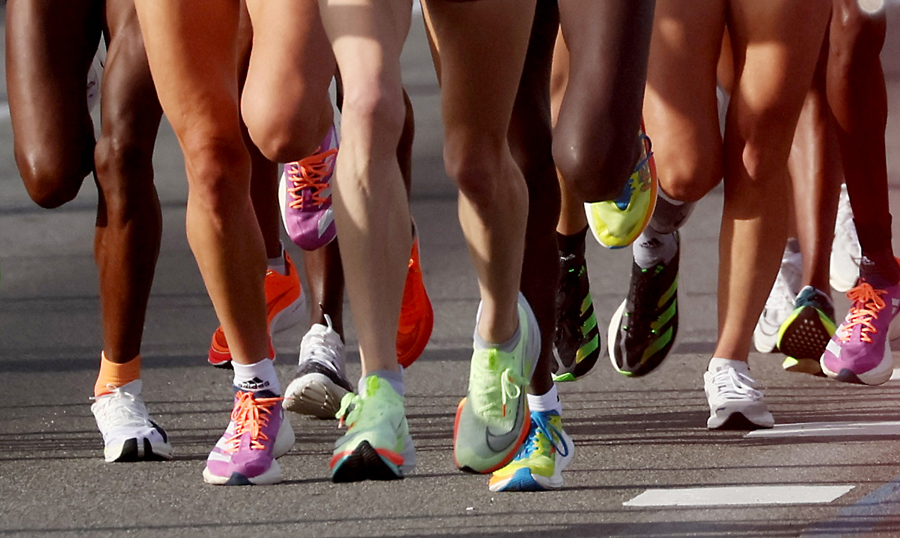
Ask any runner and they’ll tell you that knee pain and injuries are the bane of a consistent training schedule. While overuse injuries of the lower extremities are common in runners, patellofemoral knee pain (PFP) is reported as the most frequently occurring condition(1). PFP is defined as a knee condition that causes pain beneath or around the kneecap, which can occur during activities such as running, walking kneeling and squatting. Typically, PFP sufferers also experience pain under the kneecap after maintaining a sitting position for a period of time or when kneeling, and in acute cases, there may also be swelling present.
What causes PFP and who is at risk?
There are a number of theories as to why runners develop PFP, many of which involve weak or unbalanced musculature, which can lead to altered biomechanics. Commonly cited causes include tight hamstrings and Achilles tendons, inadequate arch support and excessive pronation (inwards rolling of the ankle following footstrike)(2). However, other factors are undoubtedly also involved including motor performance deficits, poor shoe choice and overtraining(3). Regardless of the cause however, PFP can often become chronic and persistent, with up to 91% of individuals reporting continued pain 4-18 years after the initial diagnosis(4)!
Another relevant fact about chronic PFP is that it’s twice as prevalent in female runners compared to male runners(5). This is most likely due to the differing anatomy between males and females; on a height for height basis, the female pelvis is wider than the male pelvis, resulting in a larger ‘Q-angle’ of the lower limbs. The Q-angle is defined as the difference from vertical when a straight line is drawn from the outer edge of the pelvis (anterior superior iliac spine) through the midpoint of the patella (kneecap) – see figure 1. The wider the pelvis in relation to height, the greater the Q-angle, and therefore the greater the torsional stresses transmitted through the knee.
Figure 1: The Q-angle
You need to be logged in to continue reading.
Please register for limited access or take a 30-day risk-free trial of Sports Performance Bulletin to experience the full benefits of a subscription. TAKE A RISK-FREE TRIAL

Andrew Hamilton

Latest Issue
Subscribe Today
Newsletter Sign Up
Testimonials
Dr. Alexandra Fandetti-Robin, Back & Body Chiropractic
Elspeth Cowell MSCh DpodM SRCh HCPC reg
William Hunter, Nuffield Health
Subscribe Today



Newsletter Sign Up

Coaches Testimonials
Dr. Alexandra Fandetti-Robin, Back & Body Chiropractic
Elspeth Cowell MSCh DpodM SRCh HCPC reg
William Hunter, Nuffield Health
Subscribe Today
Latest Issue
Keep up with latest sports science research and apply it to maximize performance
Today you have the chance to join a group of athletes, and sports coaches/trainers who all have something special in common...
They use the latest research to improve performance for themselves and their clients - both athletes and sports teams - with help from global specialists in the fields of sports science, sports medicine and sports psychology.
They do this by reading Sports Performance Bulletin, an easy-to-digest but serious-minded journal dedicated to high performance sports. SPB offers a wealth of information and insight into the latest research, in an easily-accessible and understood format, along with a wealth of practical recommendations.
*includes 3 coaching manuals
Get Inspired
All the latest techniques and approaches


Sports Performance Bulletin helps dedicated endurance athletes improve their performance. Sense-checking the latest sports science research, and sourcing evidence and case studies to support findings, Sports Performance Bulletin turns proven insights into easily digestible practical advice. Supporting athletes, coaches and professionals who wish to ensure their guidance and programmes are kept right up to date and based on credible science.
