
 close
close


 LOGIN
LOGINYou are viewing 1 of your 1 free articles. For unlimited access take a risk-free trial
Fantastic plastic: rolling to win
SPB looks at new research on regular foam rolling for cyclists. Can it significantly improve your long-term cycling performance?


The birth of the transistor back in 1947 was without doubt one of the most important technological developments of the 20th Century. Without silicon transistors, the construction of small complex circuit boards and fast processors – essential components of the computer – would have been impossible. No computers, no internet, no email, no mobile phones, no social media; you get the idea.
But the first half of the last century saw another rapid advance in technology that was to change our world. Today, you take them for granted, but without the development of plastics, life in the 21st Century would be very different. PVC, polythene, polystyrene, Teflon and nylon are all compounds developed in that era - compounds and materials that are now essential for everyday modern life.
The fitness plastic
Although you might not have thought about it, the use of plastics has found its way into many aspects of sport. If you use training shoes of any description, you can bet your bottom dollar that they’ll be reliant on plastic technology. One of the best examples is the polymer called ethylene vinyl acetate – better known as EVA to most of us. Unlike most plastics, EVA can be used to construct a solid, yet supple and compressible foam – perfect for running shoe soles. And although there are other polymer plastics in use, it’s fair to say that over the years, the cushioning qualities of EVA have protected more runners from more injuries than any other plastic!
But the wonders of EVA use don’t stop there. Add a bit of cross linking during the synthesis process and you get ‘closed-cell’ EVA foam, a light and hard, but strong and resilient foam. Triathletes and swimmers will be familiar with closed cell EVA foam as it’s the staple material for kickboards. But there’s another fitness use for this type of closed-cell EVA, and one that many of you may be familiar with – foam rollers. A simple cylindrical shape constructed of closed cell EVA foam, the foam roller has become increasingly popular with athletes who need to reduce muscle and connective tissue tension either before or after training/competition. This process of foam rolling stretches the tissue and creates friction, in a similar manner to a conventional massage(1). But just how effective is foam roller use? And can it really help dissipate muscle tension and improve performance?
Foam rolling research
During foam rolling, connective tissue known as the ‘fascia’ is rolled, stretched and compressed, utilizing the athlete’s own body weight to apply pressure to the soft tissues. The term fascia refers to the fibrous connective tissue that penetrates and surrounds muscles (sheathes), organs, bones, nerves, and blood vessels, to form a complex, three-dimensional network. Research has identified that this fascial tissue is not simply passive connective tissue; rather it is a dynamic, contractile tissue, which plays a key role in how we move.
Particularly relevant is the fact that trauma, inflammation, or immobility can cause the fascia to lose flexibility and become restricted or ‘sticky’, resulting in fascial tissue imbalances, pain, or joint dysfunction(2). Furthermore, optimal fascial tissue function is needed for smooth inter-muscular gliding and movement efficiency(3,4). In short, ‘sticky’ fascial tissue can increase internal friction and make muscular movement less efficient (bad for performance).
A number of physiological studies have concluded that foam rolling increases mobility, promotes blood flow, improves vascular function, and that it may also increase parasympathetic activity after exercise (the process by which the body switches into recovery mode). This in turn can reduce inflammation and fascial tension, and aid recovery(5). The claim of improved vascular function following foam rolling is supported by ultrasonography (ultrasound) research demonstrating significant increases in arterial tissue perfusion and blood flow velocity immediately following self myofascial release (SMR – achieved by foam rolling)(6,7).
Longer-term benefits
In theory, an improved blood flow through muscles improves the capacity for post-exercise lactate removal from the working muscles into the vascular system, thereby speeding recovery. This seems to be verified by a recent thermal imaging study, which found SMR significantly enhances metabolic recovery by accelerating lactate reduction and normalizing muscle temperature (and being more effective than passive recovery strategies)(8). However, in addition to acute post-exercise recovery benefits, some researchers have suggested that regular SMR may have longer-term performance benefits due a combination of the following overlapping mechanisms:
· Improved neurological responses in fasical tissue(pain relief and parasympathetic shift).
· A “fluidization” of the ground substance in between fascial layers, and breakdown of sticky adhesions (reducing internal friction). In short, when subjected to regular foam rolling, fascial tissue can become more fluid, which can reduce internal resistance during repetitive movements such cycling(9).
· Faster metabolite (eg lactate) clearance.
· Reduced perceived soreness, shortening the recovery time needed between high-quality training sessions.
However, while short-term studies have demonstrated transient improvements in range of motion and reduced delayed-onset muscle soreness (DOMS) in sports such as cycling, the evidence for longer-term performance gains in cycling has been either anecdotal or limited to short interventions. The question that hasn’t really been answered is “Can adding self-myofascial release (SMR) via foam roller after every training session produce measurable performance gains in already-trained endurance athletes beyond the effects of a structured endurance program training alone?” The good news however is that we can turn to brand new research to get a definitive answer.
New research
Scientists from the Department of Sport Science at the University of Innsbruck, Austria decided to investigate the performance benefits or otherwise of a long-term, 6-month program of foam rolling in fit, recreational cyclists(10). Published in the journal ‘Sports’, the researchers set out to discover whether regular foam rolling as part of a cycling program could improve any of the following metrics of performance:
· Maximum aerobic capacity.
· Better (reduced) heart rates while cycling at submaximal paces (lowering the workload at a given pace).
· The rate of lactate clearance from working muscles.
· The power output at first and second lactate thresholds (ie the cyclists’ watts/kg at the 2mmol/L (aerobic) and 4mmol/L (anaerobic) lactate thresholds.
To do this, 32 male recreational road cyclists, aged between 25 and 59, were recruited for the study. While classed as recreational, these were nevertheless serious cyclists, with at least three years of cycling training background, averaging eight to ten hours per week of training time in the saddle, and a weekly mileage averaging 150 to 190 miles per week. Importantly, none of them had practiced SMR using foam rolling prior to the study.
What they did
The cyclists were randomly allocated into one of two groups of 16 – a control group following a standardized training program and another group, following the exact same training program but with the addition of foam rolling after training. As for the training program, both groups performed four sessions per week: two long low-intensity rides, and two interval training sessions, with a total of around nine hours per week. There was a progressive 5% increase in load every four weeks, and all sessions were heart-rate and perceived-exertion controlled (monitored via Garmin Connect and training diaries). To minimize error, all the cyclists underwent standardized bike fitting two weeks before the start of the study to ensure their riding position was optimized for the training and testing.
Foam rolling protocol
As stated, the both the control group and the intervention group performed the same training program outlined above for six months. However, the foam rolling intervention group additionally undertook the following foam-rolling protocol:
· Around 40 minutes of structured SMR immediately after every cycling session using a standard 30 cm Blackroll® foam roller.
· Twelve exercises in each foam rolling session targeting the entire lower-limb kinetic chain, including the plantar fascia (base of the feet), calves, tibialis anterior (shin – see figure 1), hamstrings, quadriceps, adductors (inner thighs), iliotibial band (outer thigh), gluteals (buttocks), and lumbar fascia of the lower back.
· All foam exercises were performed at a slow 3cms per second rolling speed, 20 repetitions per set, two sets per exercise, with 30 second pauses between sets.
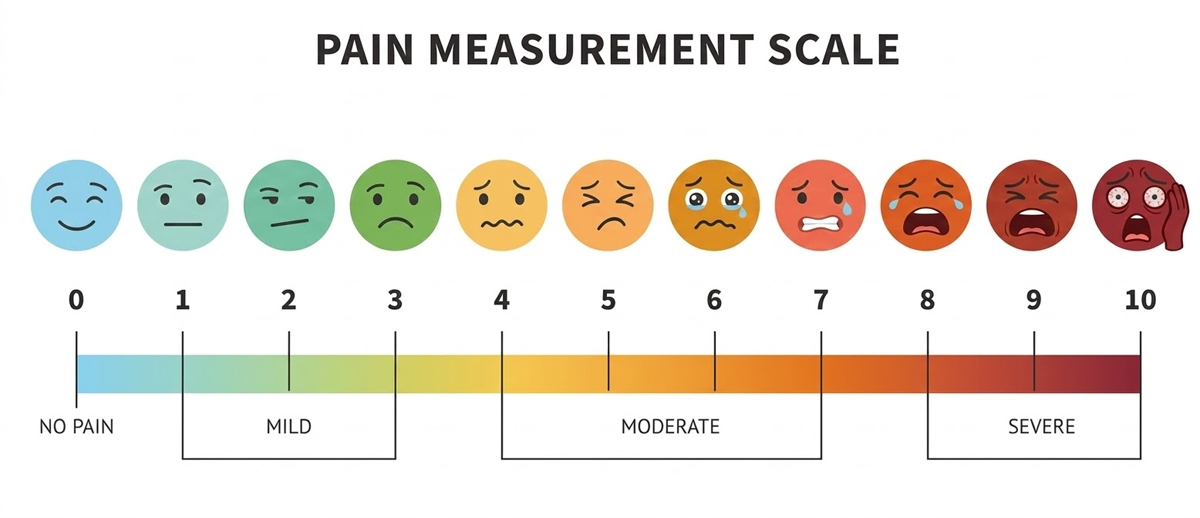
· Enough pressure was applied to generate a target pain rating of 5 to 7/ on the 1-10 numeric rating scale. (see figure 2)
· To ensure a good technique, all sessions were video-guided and compliance averaged over 92%.
Figure 1: SMR foam rolling for tibialis anterior (shin)
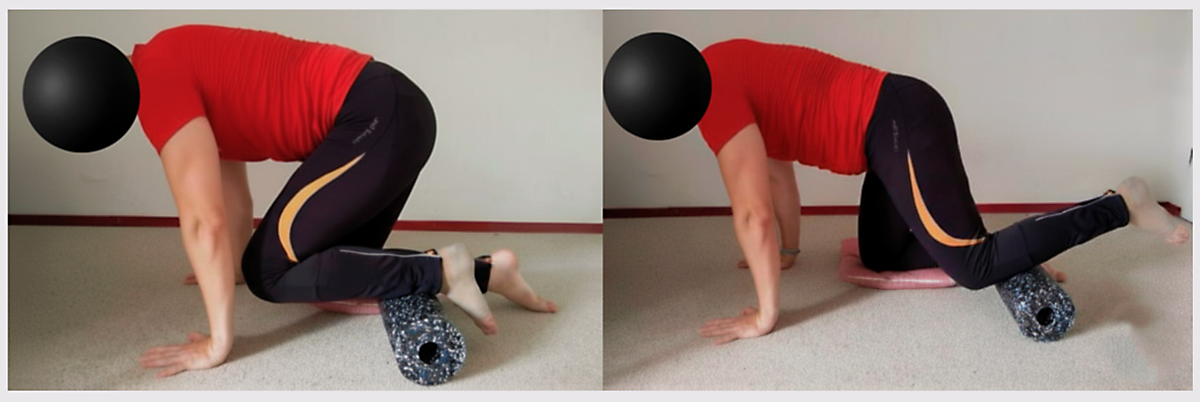
Figure 2: The numeric 1-10 pain scale
What they measured
Laboratory testing occurred under the same standard conditions at the start of the study (October) and then again after six months (April). The testing included an incremental ramp test starting at 100 watts and increasing by 50 watts every 3 minutes until exhaustion was reached. During this testing, the cyclists had exhaled gases analysed and blood lactate levels measured to determine lactate thresholds, rate of lactate clearance, and to calculate oxygen consumption/maximum aerobic capacity. Body composition and leg circumferences were also tracked. When the data was collected and statistically analyzed, the researchers looked at variables such as the age of the cyclists to see whether that affected any of the outcomes.
What they found
There were a number of key findings. Firstly, the addition of foam rolling to the training did NOT improve aerobic capacity over and above the control cyclists. Whilst a slight increase was observed in the foam rolling group, this was too small to be considered statistically significant – ie it could have arisen by chance. Likewise, the submaximal heart rates at the 2mmol and 4mmol lactate thresholds showed a small improvement on both groups but there was no extra benefit from foam rolling.
When it came to blood lactate measurements however, things became interesting. The foam-rolling group had a significantly flatter lactate slope which meant that in these cyclists, lactate accumulated more slowly as power increased compared to the control cyclists. This suggests the foam-rolling cyclists had developed greater metabolic efficiency, allowing them to clear by-products of exercise more easily and with less metabolic stress.
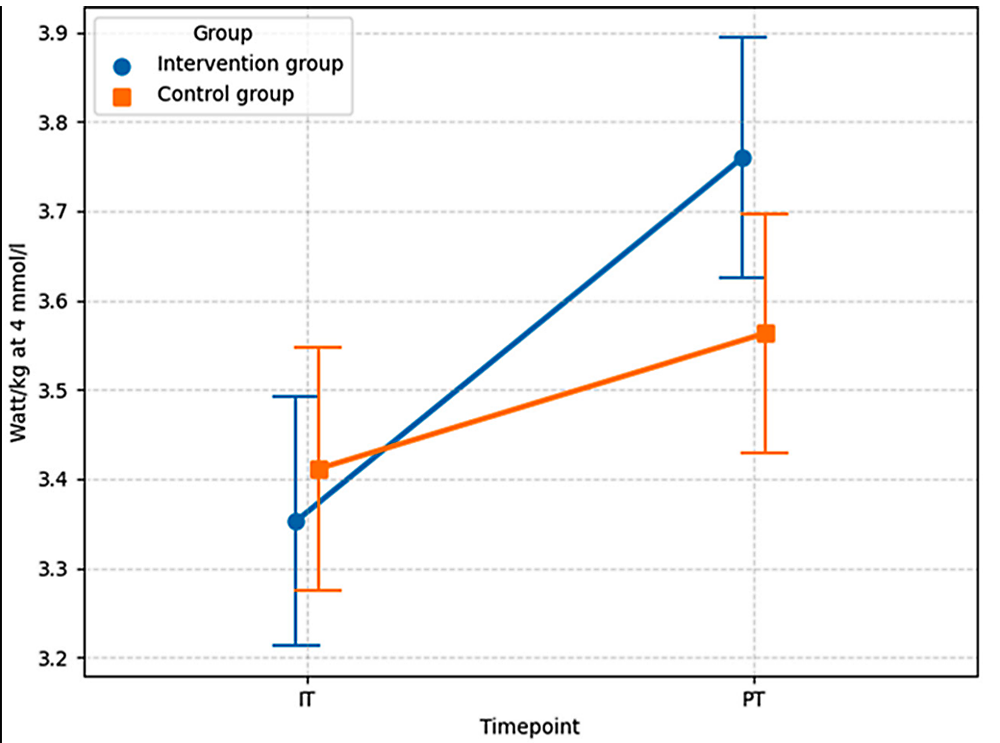
Even better, mechanical performance was significantly enhanced by the foam rolling; relative power output (watts per kilo) increased more in the foam rolling group at both the 2mmol/L (aerobic) and 4mmol/L (anaerobic) lactate thresholds (see figure 3). In plain English, the cyclists who had incorporated foam rolling into their training program were able to produce higher levels of power at these two lactate thresholds, indicating better overall efficiency and ability to maintain higher intensities without fatigue setting in. A final finding was that all of the findings above applied equally to the cyclists regardless of their age (important given the wide age spread). When summing up their findings, the authors concluded that while regular foam rolling over six months does not enhance aerobic parameters such as oxygen uptake or heart rate responses, it does improve how the body handles lactate accumulation, and boosts the ability to produce more power at these two lactate thresholds.
Figure 3: Improvements in relative power at 2mmol and 4mmol/L
Practical implications
While this new research has limitations – eg no blinding and a relatively small sample size being limited to men training at the recreational level – it does suggest that foam rolling can offer targeted benefits for endurance cyclists and other athletes focused on improved efficiency and sustained performance, rather than maximal aerobic gains. Why weren’t aerobic parameters such as VO2max improved by foam rolling? That’s because these are primarily governed by things like cardiac output, mitochondrial density, and aerobic enzyme levels rather than the properties of fascial tissue. In short, only aerobic-type training can improve these parameters.
However, let’s not downplay the significant performance gains produced when practicing SMR using a foam roller. Being able to clear lactate more efficiently enabled the foam-rolling cyclists to generate more power at lactate threshold. Consider a cyclist who adds foam rolling to his/her program; the study above suggests that he/she will be able to produce an extra 0.24–0.41 watts/kg at the 4mmol/L lactate threshold. For a 70kg cyclist, this translates to around an extra 15-30 watts of power at the same lactate level – extra power (without additional lactate accumulation) that can sustain higher speeds during high-intensity sections of a ride such as climbs, time trials, or breakaways. Over longer rides, these time savings will likely add up to a significantly faster finish time!
Even better, a foam-rolling intervention such as this is very practical (the cyclists who used it stuck to the program) and requires no extra equipment beyond a $25–30 foam roller. And because this intervention doesn’t involve additional training loads, there’s no chance of inducing further and potentially problematic fatigue, thereby delaying recovery. In fact, the opposite is true as foam rolling improves recovery. Furthermore, as the SMR protocol is performed post-ride when muscles are warm, it can double up as an active cool-down, potentially reducing next-day soreness, supporting higher weekly training quality and consistency. The downside of course is time – could that extra 35-40 minutes be better spent on extra cycling? For cyclists who are struggling to get the miles in, the answer may be ‘yes’. However, it’s likely that athletes who are short of time could cut the rolling time significantly by prioritizing quads, outer and inner thighs and the calves (although this wasn’t tested).
Will the benefits found in this study transfer to other endurance athletes such as runners, triathletes and swimmers? We cannot say for sure but there’s no reason to believe they won’t. Runners and other athletes who rely heavily on the lower-limbs should be able to expect similar gains in running economy and lactate threshold power, especially during intense training and competition. Rowers or cross-country skiers might benefit from upper-body and posterior-chain rolling, though the study did not test those areas. If you are tempted to try the addition of foam rolling, this study should be very motivational! Just remember to stick to the protocol and guidelines used in the study and be sure to perform it right after your training sessions. If you are completely new to foam rolling, this article is a good place to start.
References
1. Front. Physiol. 2019, 10, 449926
2. J. Sports Sci. Med. 2019, 18, 229–238
3. Int. J. Mol. Sci. 2023, 24, 4527
4. Functional Atlas of the Human Fascial System, 1st ed.; Churchill Livingstone: Edinburgh, UK, 2015; pp. 145–298
5. J. Bodyw. Mov. Ther. 2015, 19, 747–758
6. J. Strength Cond. Res. 2017, 31, 893–900
7. J. Strength Cond. Res. 2021, 35, 3256–3259
8. Sci. Rep. 2025, 15, 91193
9. J. Strength Cond. Res. 2014, 28, 69–73
10. Sports (Basel). 2026 Feb 13;14(2):82. doi: 10.3390/sports14020082

Andrew Hamilton
Latest Issue
Subscribe Today
Newsletter Sign Up
Testimonials
Dr. Alexandra Fandetti-Robin, Back & Body Chiropractic
Elspeth Cowell MSCh DpodM SRCh HCPC reg
William Hunter, Nuffield Health
Subscribe Today

Newsletter Sign Up

Coaches Testimonials
Dr. Alexandra Fandetti-Robin, Back & Body Chiropractic
Elspeth Cowell MSCh DpodM SRCh HCPC reg
William Hunter, Nuffield Health
Subscribe Today
Latest Issue
Keep up with latest sports science research and apply it to maximize performance
Today you have the chance to join a group of athletes, and sports coaches/trainers who all have something special in common...
They use the latest research to improve performance for themselves and their clients - both athletes and sports teams - with help from global specialists in the fields of sports science, sports medicine and sports psychology.
They do this by reading Sports Performance Bulletin, an easy-to-digest but serious-minded journal dedicated to high performance sports. SPB offers a wealth of information and insight into the latest research, in an easily-accessible and understood format, along with a wealth of practical recommendations.
*includes 3 coaching manuals
Get Inspired
All the latest techniques and approaches


Sports Performance Bulletin helps dedicated endurance athletes improve their performance. Sense-checking the latest sports science research, and sourcing evidence and case studies to support findings, Sports Performance Bulletin turns proven insights into easily digestible practical advice. Supporting athletes, coaches and professionals who wish to ensure their guidance and programmes are kept right up to date and based on credible science.
