
 close
close


 LOGIN
LOGINFlywheel training: flying performance for endurance athletes?

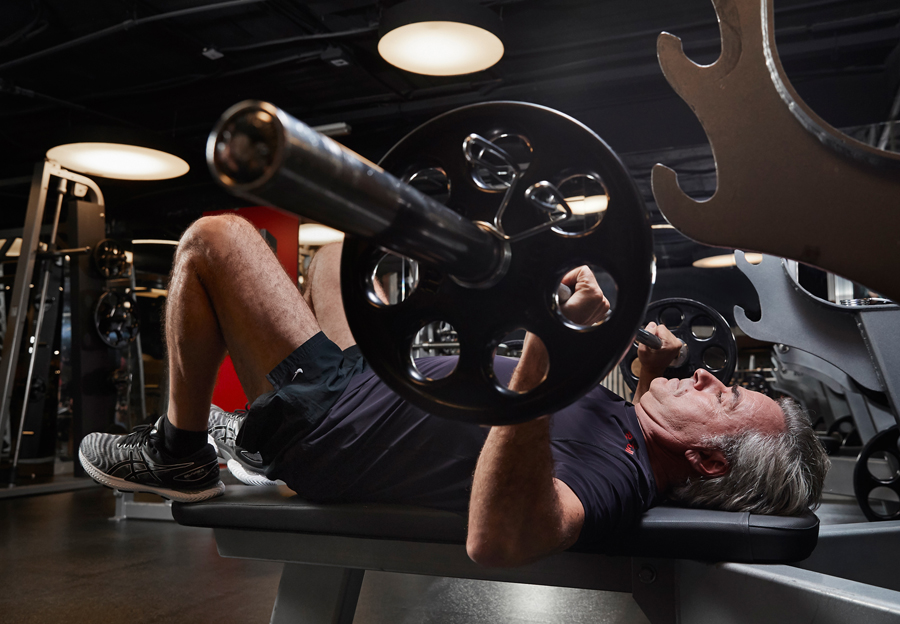
Although it may be unfamiliar to most athletes, a new form of strength training known as ‘flywheel’ or ‘inertial’ training is attracting a lot of attention from researchers. With flywheel training (also known as isoinertial or yoyo training) instead of lifting a weight against gravity, you accelerate or decelerate a flywheel (see image above). The potential advantages of flywheel training are that the resistance is variable and unlimited, regardless of the direction or speed of motion. In particular, this allows eccentric overload (high muscle loading during the lowering/muscle lengthening phase of the lift) to be easily achieved – important because eccentric muscle exercise is particularly effective for building strength. But just how effective is inertial training for endurance athletes? Well, a fairly recent study on swimmers provides very persuasive evidence in its favour [Journal European Journal of Sport Science. Volume 17, 2017 - Issue 4, P369-377].
The research
The aim of this study was to evaluate the effects of four weeks of dry-land inertial training on muscle force, muscle power, and swimming performance. Fourteen national-level, competitive swimmers were randomly divided into two groups:- A control group – who simply continued with their pool training during the 4-week study period.
- The inertial training group – who also continued their normal swim training, but also added in inertial training three times per week. This training was focussed on improving muscle strength required during the upsweep phase of the arm stroke in front crawl and butterfly stroke.
The findings
After four weeks of training, the inertial-trained group recorded a 12.8% increase in their muscle force, and 14.2% increase in muscle power. The control group recorded no gains. But did this translate into improved performance? Well, compared to the control group, the inertial-trained swimmers also significantly improved their pool times, swimming 0.76% and 1.86% faster in the freestyle and butterfly tests respectively. Interestingly, the degree of improvement in each inertial-trained swimmer correlated closely to their strength and power gains Eur J Sport Sci. 2016 Oct 19:1-9. [Epub ahead of print]Implications for endurance athletes
These results suggest that inertial training is a very effective alternative to conventional weight training. In some environments, the compact size of these inertial units (which can train a wide variety of muscle groups) may offer an advantage – for example, installation by the poolside or in a home gym. And while relatively new, this mode of strength training has support from other recent studies. For example, a study published on inertial training in the previous year found that just one weekly session of inertial training - emphasising eccentric overload - was able to significantly boost lower-limb muscle power in athletes who had previously suffered patella tendon injury to the knee [J Strength Cond Res. 2016 Jul;30(7):1834-42]. Even better, these strength gains occurred without triggering any injury recurrence (something that is all too common with this type of injury).PRACTICAL SUGGESTIONS
- Inertial training facilities are few and far between at the moment but it might be worth checking in your area to see if anything is available.
- The best training protocol for inertial systems has yet to be established (this is something we will return to in a later issue) but the key seems to be to emphasise eccentric-type movements. Encouragingly, the evidence suggests that just one session per week could be effective.
- Don’t forget that conventional weight training is still a proven performance enhancer. Remember to target the key muscles in your sport. For runners and cyclists, that means calves, thighs and buttocks. Swimmers will need to pay special attention to the chest shoulders and back, emphasising patterns of muscle movement that most closely mimic those used in the swimming stroke.
You need to be logged in to continue reading.
Please register for limited access or take a 30-day risk-free trial of Sports Performance Bulletin to experience the full benefits of a subscription. TAKE A RISK-FREE TRIAL

Andrew Hamilton

Latest Issue
Subscribe Today
Newsletter Sign Up
Testimonials
Dr. Alexandra Fandetti-Robin, Back & Body Chiropractic
Elspeth Cowell MSCh DpodM SRCh HCPC reg
William Hunter, Nuffield Health
Subscribe Today
Newsletter Sign Up

Coaches Testimonials
Dr. Alexandra Fandetti-Robin, Back & Body Chiropractic
Elspeth Cowell MSCh DpodM SRCh HCPC reg
William Hunter, Nuffield Health
Subscribe Today
Latest Issue
Keep up with latest sports science research and apply it to maximize performance
Today you have the chance to join a group of athletes, and sports coaches/trainers who all have something special in common...
They use the latest research to improve performance for themselves and their clients - both athletes and sports teams - with help from global specialists in the fields of sports science, sports medicine and sports psychology.
They do this by reading Sports Performance Bulletin, an easy-to-digest but serious-minded journal dedicated to high performance sports. SPB offers a wealth of information and insight into the latest research, in an easily-accessible and understood format, along with a wealth of practical recommendations.
*includes 3 coaching manuals
Get Inspired
All the latest techniques and approaches


Sports Performance Bulletin helps dedicated endurance athletes improve their performance. Sense-checking the latest sports science research, and sourcing evidence and case studies to support findings, Sports Performance Bulletin turns proven insights into easily digestible practical advice. Supporting athletes, coaches and professionals who wish to ensure their guidance and programmes are kept right up to date and based on credible science.
