
 close
close


 LOGIN
LOGINTraining program design: man vs. machine
AI continues to become ever more powerful and sophisticated. But is it able to match a training program designed by an experienced coach? SPB looks at new research



The march of digital technology, and more specifically artificial intelligence (AI) is relentless and accelerating. With each passing month, the ability of AI to grapple with and provide solutions to complex problems rises exponentially. Indeed, just earlier this month, Microsoft’s AI CEO Mustafa Suleyman predicted that most, if not all, professional tasks carried out by white collar workers (lawyers, accountants, project managers, marketing staff etc) will be fully automated by AI within the next 12 to 18 months(1)! Putting aside the profound societal changes that will inevitably occur, the rise and rise of artificial general intelligence is undoubtedly going to impact coaches and their athletes too, particularly when it comes to designing and developing training programs.
AI-designed training programs
It was around two years ago that we reported on research testing the use of AI-generated training programs for runners (see this article). In this research, German scientists investigated how effective an AI running training program generated by ChatGPT was for delivering running training plans, and also to investigate the quality differences in the generated program based on how much background information was given to ChatGPT during the input process(2).
The key finding was that when assessed by experienced running coaches, the AI-generated programs were rated slightly below average to slightly above average, depending on how much background information (training and injury history, previous fitness test results etc) was given to ChatGPT beforehand. Ironically, it performed worse when this background information was limited, making less unsuitable for the very novice runners who might be tempted to use it – because many amateur or novice runners are not aware of all the factors that need to be factored in when designing a training program.
New research on swimmers
How far has AI moved on in the intervening two years? Are the training programs generated in 2026 of a much higher quality compared to those of 2024? To help answer this question, we can turn to new research by scientists from the University of Genoa in Italy on AI-generated elite swimming programs(3). Published in the journal ‘Biology of Sport’, this study set out to investigate the capability of ChatGPT-4 to design weekly training plans for elite competitive swimmers.
In particular, ChatGPT-4 was examined for its ability to distinguish between programs suitable for distance swimmers vs. those suitable for sprint swimmers. The reasoning behind this line of inquiry is because swimming training tends to be highly structured around precise intensity zones, ranging from low-intensity recovery (A1) to maximal anaerobic sprint intensity (C3). Good programs must therefore be able to take account of the differing recovery requirements and psychological demands of training in these different zones.
What they did
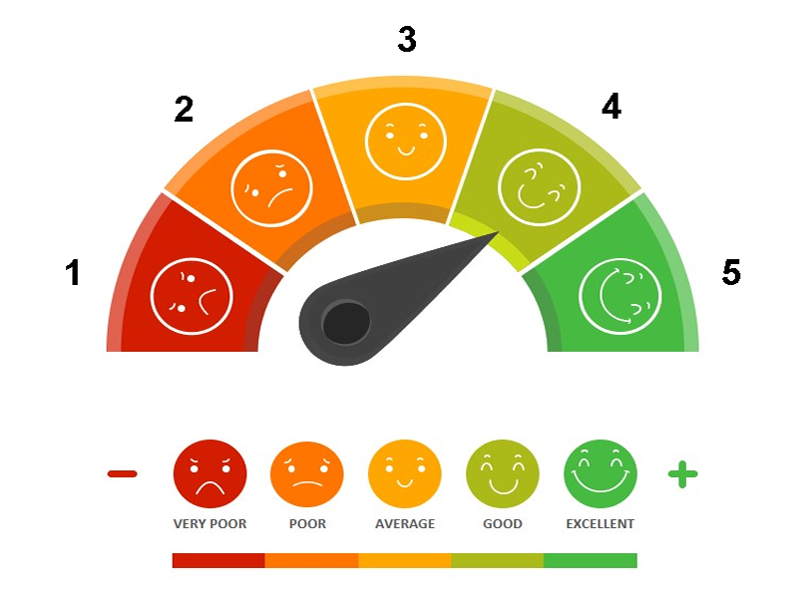
To carry out this study, the researchers recruited 23 professional swim coaches and 36 elite swim athletes. Feeding in the required background information and the training goals, ChatGPT-4 was instructed to generate suitable weekly training plans for both the distance and the sprint swimmers in order to meet these goals. Once the training programs were generated, the swimmers were asked to execute them and comment on what they were like to use in practice. Meanwhile, the coaches assessed the weekly AI-generated programs for the quality and suitability, and how they compared to the coaches’ own programs that they had used previously. Both the swimmers and the coaches were then asked to rate the AI programs across three categories: weekly frequency, intensity adjustments, and overall training structure. This rating was carried out using a very simple 5-point ‘Likert visual scale’, which ranges from ‘very poor’ to ‘very good’ (see figure 1).
Figure 1: The ‘1-5’ Likert scale commonly used in questionnaires
What they found
The first key finding was that coaches were generally more positive about the AI-generated programs than athletes who had to actually perform them! Sixty-five percent of the coaches commented that the AI-generated plans were ‘usable’, albeit they needed minor modifications. The athletes on the other hand were far less positive. Only 27.8% found the AI-generated programs worked well for them, while nearly half of the athletes asked their coaches to make major changes to these programs. Meanwhile, 25% rejected them entirely and refused to perform them!
When it came to the suitability of these programs for the distance vs. the sprint swimmers, there was a large discrepancy. The distance swimmers found that while the AI-generated programs worked well for sessions in the low-intensity (A1) endurance/recovery) zone, they struggled significantly with moderate and high-intensity zones (A2, B1, B2), often prescribing too many sets yet insufficient recovery – ie seemingly failing to appreciate the physical and psychological toll of intensive aerobic and threshold training. Conversely, the sprint swimmers commented that while AI suggested an excessive frequency of anaerobic threshold work in the distance swimmers, it prescribed insufficiently frequent sessions in the maximal intensity zones (C1, C2, C3), which are critical for honing sprint-swim performance.
When taking into account the final scoring, it was found that although there was no significant difference in the overall quality of sprinting vs. distance programs, AI produced lower quality scores when trying to prescribe sessions targeting the threshold zones (A2 and B zones), which suggests that it still lacks a nuanced understanding of how to periodize sessions inducing moderate-to-high amounts of cardiovascular demand. The last finding was that older coaches and the male swimmers tended to rate the AI programs more poorly than did the younger coaches and female swimmers.
Implications for coaches and athletes
To answer our initial question about the progress of AI for putting together training programs, it seems that although improvements are being made, there is still plenty of room for progress. This particularly seems to be the case for older and more experienced coaches and athletes, who already have a deeper understanding of what is required to design a successful training program. An AI-designed program also faces another major drawback; while it may be excellent at gathering and synthesizing data, it lacks the coach’s ability to adjust a plan based on an athlete’s immediate psychological or physiological feedback(4). An experienced coach can read the early signals indicating that an athlete may be struggling with a particular training regimen, and adjust it accordingly. Likewise, experienced athletes can become very good at self monitoring, and know when and how to adjust a program if needed. But when AI is your coach, there’s nobody there to check progress!
In conclusion, this new research suggests that while AI continues to improve, and an AI program may serve as a good starting point - assisting coaches and athletes to get underway by providing a basic template - it will likely need adapting to match the individual physiological and psychological responses of athletes. This is especially true when higher training intensities are required, and where the balance between enough volume to stimulate adaptation and enough recovery times becomes critical for performance. For these kinds of programs, some kind of continual monitoring (through a coach or using wearable technology) should be considered an essential addition to a training template. As the authors eloquently alluded to in their summary, while an AI algorithm can write the ‘music’ of a training plan, it is still up to a human coach or the experienced athlete to ‘conduct the orchestra’ and to ensure the athlete reaches the podium safely and effectively!
References
1. Business Insider Feb 12, 2026 www.businessinsider.com/microsoft-ai-ceo-mustafa-suleyman-white-collar-tasks-automation-prediction-2026-2
2. Journal of Sports Science and Medicine (2024) 23, 56 – 72
3. Biol Sport. 2025 Sep 16:43:355-367. doi: 10.5114/biolsport.2026.152352. eCollection 2026 Jan
4. Nutrients 2025. 17(3), 442


Latest Issue
Subscribe Today
Newsletter Sign Up
Testimonials
Dr. Alexandra Fandetti-Robin, Back & Body Chiropractic
Elspeth Cowell MSCh DpodM SRCh HCPC reg
William Hunter, Nuffield Health
Subscribe Today
Newsletter Sign Up

Coaches Testimonials
Dr. Alexandra Fandetti-Robin, Back & Body Chiropractic
Elspeth Cowell MSCh DpodM SRCh HCPC reg
William Hunter, Nuffield Health
Subscribe Today
Latest Issue
Keep up with latest sports science research and apply it to maximize performance
Today you have the chance to join a group of athletes, and sports coaches/trainers who all have something special in common...
They use the latest research to improve performance for themselves and their clients - both athletes and sports teams - with help from global specialists in the fields of sports science, sports medicine and sports psychology.
They do this by reading Sports Performance Bulletin, an easy-to-digest but serious-minded journal dedicated to high performance sports. SPB offers a wealth of information and insight into the latest research, in an easily-accessible and understood format, along with a wealth of practical recommendations.
*includes 3 coaching manuals
Get Inspired
All the latest techniques and approaches


Sports Performance Bulletin helps dedicated endurance athletes improve their performance. Sense-checking the latest sports science research, and sourcing evidence and case studies to support findings, Sports Performance Bulletin turns proven insights into easily digestible practical advice. Supporting athletes, coaches and professionals who wish to ensure their guidance and programmes are kept right up to date and based on credible science.
