
 close
close


 LOGIN
LOGINMarathon preparation: take the long-term approach
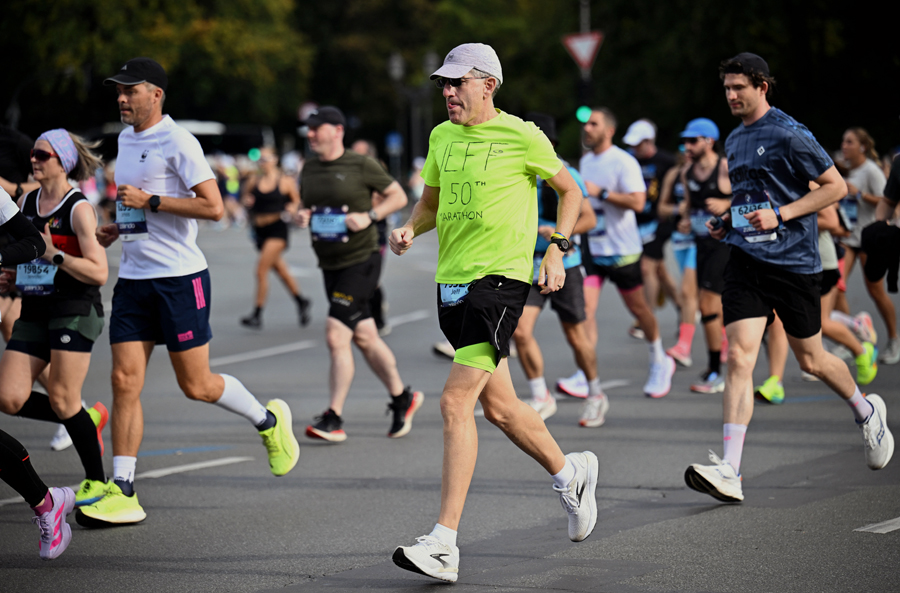
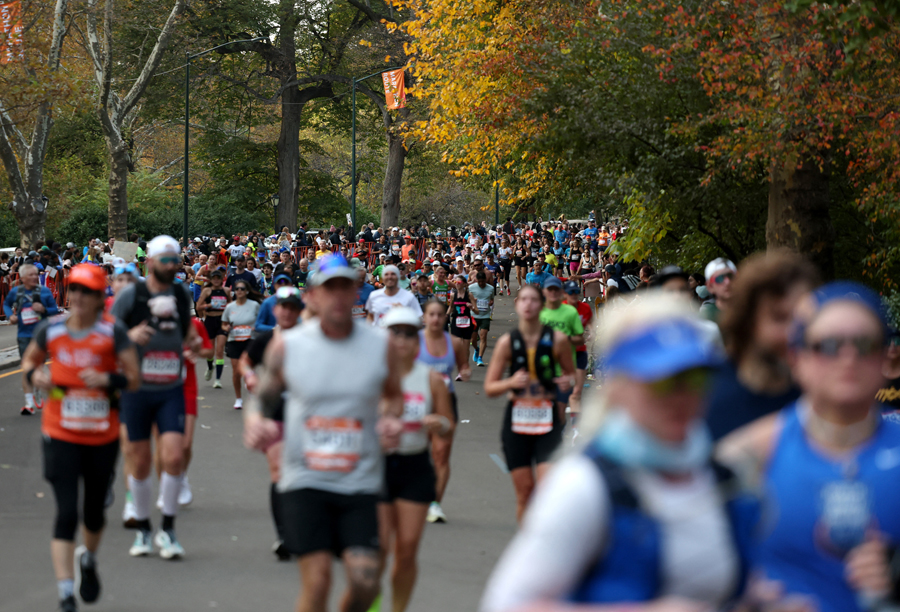
Marathon running is a very popular athletic event for individuals across a wide range of ages and ability levels. However, while much is known about the training of elite marathoners - thanks to careful documentation of their training and communication with their coaches - scientific investigation of effective training practices for amateur runners has proven to be more challenging. Because of the nature of the event, extremely long training/preparation programs are required. And while it’s possible to conduct these studies, it’s difficult to do so with large numbers of subjects because so many will struggle to complete the program for one reason or another.
Addressing the challenge
In an effort to address this challenge, a group of researchers recently came up with a novel idea. They decided to ask for training history data from runners prior to competing in a major marathon. While it’s much more challenging to collect accurate and controlled training data from large numbers of athletes in this way, this kind of study design has distinct advantages; it’s possible to get a better sense of the importance of training volume, training frequency, and training types (such as run training or cross training) for producing good marathon performance. This kind of pre-race training information can provide novel insights as to how to structure marathon training, providing critical information to coaches and athletes alike.
What they did
The researchers (from the US) put together a unique research project to learn more about training characteristics and marathon running performance by using a unique design(1). The study was a prospective study – where the subjects were identified and surveyed before the race was run. This is in contrast to a large number of studies, which are retrospective in design, meaning that an event occurs and researchers look back in time to identify potential influences on the event’s outcome. In this study, the researchers had the necessary data prior to the race. Prospective studies are more useful than retrospective studies as they tend to have less bias and are more effective at determining cause-and-effect.
The authors recruited 1063 registered participants for the Boson Marathon, with 917 completing all survey and training responses. Approximately 45% of these respondents were males and 55% females. They were defined as ‘developmental-level’ athletes, having trained for an average of nine years and having participated in an average of 16 previous marathons. In other words, while they were amateurs, these were experienced runners.
The subjects filled out survey in the month prior to competing in the race. To get a better understanding of who the subjects were, and to account for potential sources of bias, the researchers collected basic demographic information. They also asked the subjects how many years they had been training for marathons, and how many marathons they had participated in. The most interesting component of the survey was the running training and cross-training questions. For running training, the subjects were asked about their weekly running hours, their weekly mileage or kilometers, their total numbers of runs per week, and the number of hard sessions they performed.
For cross-training, they were asked how many weekly hours of nonspecific general training they performed for their sport. This could include cycling, swimming, rowing, strength and conditioning work, or any other purposeful training. The subjects were asked about the total number of sessions per week they performed with cross-training.
For all the training-related questions, the subjects were asked to provide a response for ‘over the last year’ and ‘over the last four months’. ‘Over the last year’ was considered to represent training habits during the 12-month period prior to the race up, while ‘over the last four months’ represented the last four months before the race. This is a key distinction because the authors were particularly interested to see whether long-term training habits (12-4 months before the race), short-term training habits (4-0 months before the race), or changes in behavior (differences in the runners’ 12-4 months and 4-0 months training habits) influenced performance.
Regarding behavior changes, an important point of comparison was changes in training behavior during the last four months before the race. One of the main metrics was the training frequency change (TFC), which was calculated by taking the training frequency during months 4-0 and subtracting the frequency during month 12-4 before the race. If this number was positive, training frequency increased prior during the last 4 months before the race. If the number was negative, training frequency decreased prior during the last 4 months before the race. The data from the runners was then number crunched and analyzed with their respect to each runner’s own performance in the marathon. The authors calculated whether differences in training frequency, training duration, training distance, or the frequency of hard training sessions influenced performance.
You need to be logged in to continue reading.
Please register for limited access or take a 30-day risk-free trial of Sports Performance Bulletin to experience the full benefits of a subscription. TAKE A RISK-FREE TRIAL

Latest Issue
Subscribe Today
Newsletter Sign Up
Testimonials
Dr. Alexandra Fandetti-Robin, Back & Body Chiropractic
Elspeth Cowell MSCh DpodM SRCh HCPC reg
William Hunter, Nuffield Health
Subscribe Today
Newsletter Sign Up

Coaches Testimonials
Dr. Alexandra Fandetti-Robin, Back & Body Chiropractic
Elspeth Cowell MSCh DpodM SRCh HCPC reg
William Hunter, Nuffield Health
Subscribe Today
Latest Issue
Keep up with latest sports science research and apply it to maximize performance
Today you have the chance to join a group of athletes, and sports coaches/trainers who all have something special in common...
They use the latest research to improve performance for themselves and their clients - both athletes and sports teams - with help from global specialists in the fields of sports science, sports medicine and sports psychology.
They do this by reading Sports Performance Bulletin, an easy-to-digest but serious-minded journal dedicated to high performance sports. SPB offers a wealth of information and insight into the latest research, in an easily-accessible and understood format, along with a wealth of practical recommendations.
*includes 3 coaching manuals
Get Inspired
All the latest techniques and approaches


Sports Performance Bulletin helps dedicated endurance athletes improve their performance. Sense-checking the latest sports science research, and sourcing evidence and case studies to support findings, Sports Performance Bulletin turns proven insights into easily digestible practical advice. Supporting athletes, coaches and professionals who wish to ensure their guidance and programmes are kept right up to date and based on credible science.
