
 close


 LOGIN
Marathon performance: durable enough for the long run?
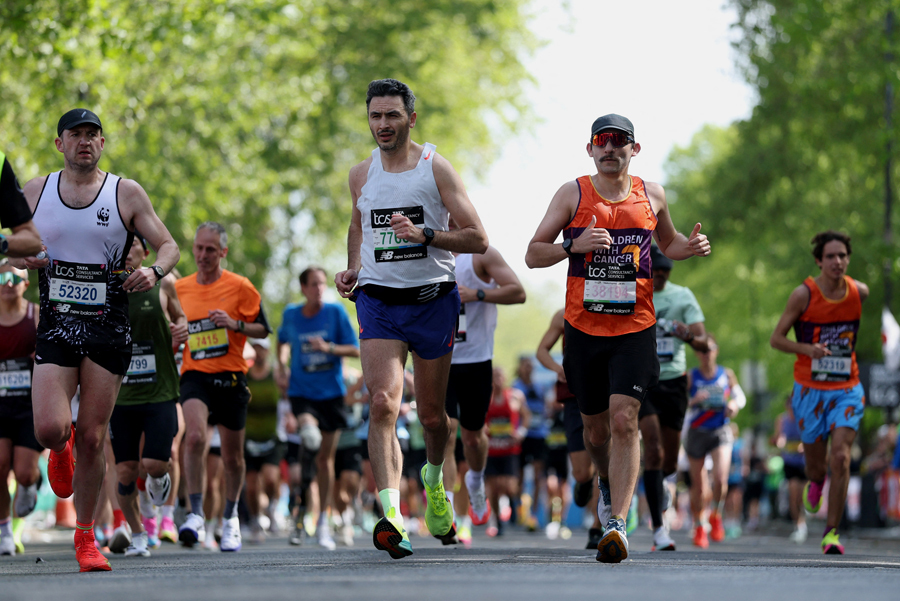
The basic equation for endurance running performance has known for quite some time: increase maximum oxygen uptake (VO2peak), running economy, and lactate threshold as much as possible. The more oxygen a runner can consume, the less oxygen they consume to run a certain speed, and the faster they can run without undue metabolic stress, the faster they’re going to race. But if only it were so simple! While these markers of performance certainly are related to endurance running performance, there is an assumption that these qualities are static and they don’t change throughout a race. It turns out that this is not a valid assumption, and these qualities can and do change over the course of a race, sometimes dramatically.
Durability reiterated
As we seen in other recent articles, it’s not just the absolute magnitude of VO2peak, running economy, and lactate threshold that matters for performance. It also matters how ‘durable’ these qualities are. The more a runner can maintain physiological function in the face of increasing fatigue, the faster they’re going to perform. The concept of durability has become more widely accepted over the last 5-10 years. However, while it’s understood conceptually, it’s less understood operationally in terms of what determines durability, how durability is affected by fatigue, and the extent to which durability determines performance across different domains. Fortunately, the research community is starting to provide answers, seeking to better understanding understand the relationship between durability, fatigue, and performance. And the study we look at look at today further contributes to that understanding.
Marathon research
A pair of British researchers sought to make a direct connection between the durability of markers of endurance performance and marathon performance itself(1). Prospective runners of the 2024 London Marathon were recruited for the study. To qualify for participation, the subjects had to have an expected marathon completion time of less than 4:00 hours for males and 4:25 for females. They also needed to have been free of any injuries for at least three months and regularly be training over 40 kilometers per week. Eighteen runners (11 males and 7 females), completed the full study. Their average combined marathon time was 3hrs:17mins, and they were training an average of 76 kilometers per week. So while not elite athletes, they were solid runners.
The study was designed to assess the subjects’ physiological capacities, assess the durability of those physiological capacities, and then determine the relationship of those testing outcomes to marathon performance. The subjects performed two laboratory testing sessions with at least one day between testing sessions, but not more than 14 days. The testing sessions were also performed within six weeks of the 2024 London Marathon to ensure that the physiological status of the subjects during the marathon was similar to the status when assessed. It would be hard to draw conclusions if there were months and months between the tests and the actual marathon race!
Testing the runners
The structure of the two testing sessions was similar. During the first visit, subjects were assessed for basic anthropometric measurements and then performed an incremental exercise test. During the second testing session, the subjects performed a challenging 90-minute bout of running at a pre-determined speed, a 5-min recovery walk, and then a second incremental exercise test (see figure 1 for an overview of the study structure). The results of the incremental exercises tests were then compared. As one incremental test was performed in an unfatigued state, and one was performed after 90-minutes of difficult running, it allowed the researchers to assess the potential deterioration of any physiological parameters following exercise. In other words, it allowed them to assess the subjects’ durability. This allowed researchers to determine the influence of both traditional physiological markers of performance on marathon performance, as well as how the durability of those markers influenced performance.
Figure 2: Overview of study protocol
You need to be logged in to continue reading.
Please register for limited access or take a 30-day risk-free trial of Sports Performance Bulletin to experience the full benefits of a subscription. TAKE A RISK-FREE TRIAL

Latest Issue
Subscribe Today
Newsletter Sign Up
Testimonials
Dr. Alexandra Fandetti-Robin, Back & Body Chiropractic
Elspeth Cowell MSCh DpodM SRCh HCPC reg
William Hunter, Nuffield Health
Subscribe Today

Newsletter Sign Up

Coaches Testimonials
Dr. Alexandra Fandetti-Robin, Back & Body Chiropractic
Elspeth Cowell MSCh DpodM SRCh HCPC reg
William Hunter, Nuffield Health
Subscribe Today
Latest Issue
Keep up with latest sports science research and apply it to maximize performance
Today you have the chance to join a group of athletes, and sports coaches/trainers who all have something special in common...
They use the latest research to improve performance for themselves and their clients - both athletes and sports teams - with help from global specialists in the fields of sports science, sports medicine and sports psychology.
They do this by reading Sports Performance Bulletin, an easy-to-digest but serious-minded journal dedicated to high performance sports. SPB offers a wealth of information and insight into the latest research, in an easily-accessible and understood format, along with a wealth of practical recommendations.
*includes 3 coaching manuals
Get Inspired
All the latest techniques and approaches


Sports Performance Bulletin helps dedicated endurance athletes improve their performance. Sense-checking the latest sports science research, and sourcing evidence and case studies to support findings, Sports Performance Bulletin turns proven insights into easily digestible practical advice. Supporting athletes, coaches and professionals who wish to ensure their guidance and programmes are kept right up to date and based on credible science.
