
 close
close


 LOGIN
LOGINYou are viewing 1 of your 1 free articles. For unlimited access take a risk-free trial
HIIT sessions: what’s the true hit on the body?
How does the length of the intervals in a high-intensity interval training (HIIT) session impact recovery times? SPB looks at new research that reveals caution may be required for certain types of sessions


If you’re a regular SPB reader, you’ll be well aware of the value of adding some high-intensity interval training (HIIT) to your overall training protocol. In recent years, we have highlighted numerous studies in several articles showing that adding HIIT (short bursts of high- or very high-intensity effort up to 60 seconds with short rest intervals in between for recovery) to a training program can give endurance athletes of all abilities a real boost. In short, the evidence demonstrates that utilizing HIIT as part of your schedule can deliver significant performance gains in terms of maximal oxygen uptake, higher lactate thresholds (the maximum speed you can maintain before lactate-induced fatigue sets in), anaerobic power, time trial performance, improved body composition (ie lower body fat percentage) and improved cardiovascular health as measured by key blood markers such as cholesterol, lipids and glucose(1-5).
The long and short of HIIT
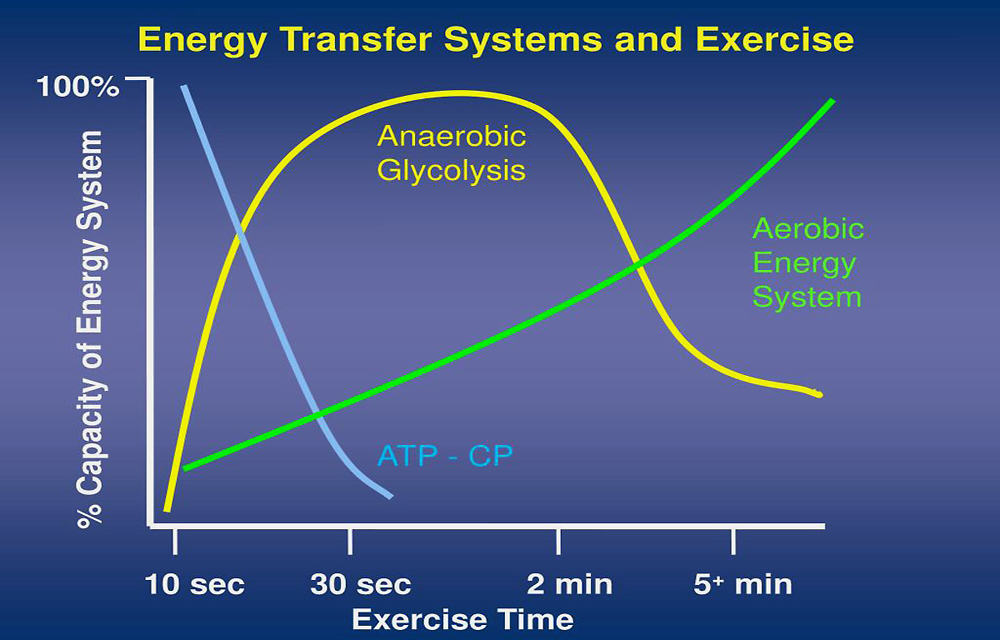
While HIIT is now a familiar training concept for most athletes, choosing a HIIT session is not quite as straightforward as it seems. That’s because HIIT work intervals can last from anything to an all-out 10-second sprint to a more leisurely (but still hard!) 60-second interval, which spans quite a range of physiological demands (see figure 1). That 10-second sprint is almost all reliant on the ATP-phospho-creatine energy system, which fuels muscles for very high-intensity/flat out work but for not much more than ten seconds or so. However, an interval lasting a minute or so is relying heavily on the lactate/anaerobic pathway for energy production with minimal input from the ATP/CP system. And while aerobic metabolism plays only a small role during that minute, it is involved in regenerating energy stores during the recovery period. In short, the length of your intervals in HIIT profoundly affects the energy system you are training, which results in different metabolic demands, both during and after a session.
Figure 1: Energy system used in maximal exercise by exercise duration
Choosing a HIIT session for you
If different types of HIIT sessions challenge different energy systems in different ways, how does this affect the type of HIIT session you choose, and the way it should be integrated into your training program? For some athletes, the choice of session is fairly straightforward. For example, if your sport involves repeated very short sprints interspersed with relatively long periods of rest, the chances are you’ll benefit most from sprint-interval HIIT, and that’s where your focus should be. For endurance athletes seeking to maximize oxygen uptake and sustained power outputs at high intensity, HIIT sessions of 60 seconds or longer would likely provide the greatest benefits.
Where this question gets trickier is for athletes whose sports draw on all three energy systems. A good example of this is middle distance running events (ie 800m, 1,500m and 5,000m distances). At such distances, athletes need excellent levels of aerobic power to sustain the distance, but must also excel anaerobically – ie being able to push deep into the fatigue zone when the muscles are burning due to accumulated lactate. In addition, they have to possess good sprint ability, for example to break away from the pack and make an all-out dash for the line. Therefore, all three types of HIIT session are not just desirable but essential in a training program in order to arm these athletes with the fitness attributes needed to win.
HIIT fatigue and recovery
As we mentioned above however, these different types of different HIIT sessions impact the key energy systems differentially, and that in turn affects an athlete’s responses, especially when it comes to recovery. The question then is how can middle distance athletes and their coaches structure different HIIT sessions to ensure optimal recovery between the sessions. That will of course depend on the fatigue generated by different types of HIIT sessions, with more fatigue-inducing sessions requiring longer recoveries before the next hard training session.
Previous studies into the effects of HIIT training – particularly recovery afterwards - have investigated various different parameters at various time points after HIIT. These include perceived post-exercise fatigue, post-exercise soreness and markers of inflammation, markers of immune response (very intense exercise can induce a temporary dip in immune function) and post-exercise jumping and sprinting ability. However, there’s very little data comparing how all of these can vary following different duration HIIT sessions – ie data giving a complete picture of generated fatigue and rate of recovery following sprint-, short- (30 seconds) or longer-duration (60 seconds) intervals in a HIIT session. For athletes such as middle distance runners who may be performing all three types of sessions, that’s far from ideal as it makes the construction of a balanced training program containing different HIIT sessions much more difficult. The good news however is that very recent research has addressed this topic and come up with definitive answers.
New research
Published in the journal ‘Biology of Sport’, this study investigated how neuromuscular fatigue and inflammation changed in middle-distance runners following exposure to three different high-intensity interval training (HIIT) regimes: short-interval HIIT, long-interval HIIT, and repeated sprint training (RST). They also looked at post-exercise performance in terms of strength and power, and monitored the runners’ subjective feelings of residual fatigue and any muscle soreness for several days after training.
The study used a ‘crossover design’, which basically meant all 33 runners in the study performed all three types of HIIT sessions at different times in the study. Crossover designed studies, although more time consuming to carry out, give more robust findings because each participant can serve as their own control to any intervention. In short, it helps remove the individual variability factor that could dilute the strength of findings. The order of the HIIT sessions performed was also randomized for each runner to help avoid any ‘carry-over’ effects from one training session to another when the data as a whole was analyzed.
The intervention
Thirty three male middle-distance runners who had at least three years of middle-distance training experience were recruited. During the study period, each runner completed one type of HIIT session per week, scheduled on Mondays following a 48-hour rest period over the weekend. This timing allowed athletes to begin each week in a rested state. After each Monday HIIT session, the runners were given another 48 hours of rest before resuming their regular training routines. Assessments were conducted at four time points: at rest (prior to the HIIT session), immediately after the session, 24 hours post-session, and 48 hours post-session. As for the HIIT sessions themselves, these were as follows:
· Long HIIT: This entailed four repetitions each of 1,000 meters at 95% of their maximal aerobic speed (MAS) with 3-minute recovery periods in between. MAS is the fastest speed you can sustain using mostly oxygen, so this session was pitched just below that limit. Training in this way is designed to develop a more powerful aerobic engine.
· Short HIIT: Here, the runners performed 12 x 200 meters at 120% of their MAS (again with 3-minute recovery periods). Because the distance is shorter, athletes can run beyond their sustainable aerobic limit, which builds the ability to develop higher speeds and cope better with the accumulation of lactate in fatiguing muscles.
· Repeated sprints: Instead of running at a specific percentage of their MAS, the runners were asked to perform four sets of 6 x 20-meter sprints as fast as possible (ie flat out). Sprints were separated by 20-second periods of gentle jogging, while each set of 6 x sprints was separated by five minutes of complete rest. Although the total distance covered (480m) was much shorter than the other two HIIT sessions, the intensity was at the absolute maximum.
How they tested
Following the HIIT sessions, the researchers carried out both subjective testing (asking the runners how they felt) and objective testing using a number of biochemical and physical assessments. There were as follows:
· Markers of inflammation: The runners’ saliva was checked for levels of interleukin-6 (IL-6), a protein associated with inflammation and that muscles release when they experience unusually high loading or suffer micro-tears.
· Explosive power: Runners performed a countermovement jump test to test explosive power and strength. A reduced performance in this test indicates neuromuscular system fatigue and incomplete recovery from previous exercise.
· Maximum strength: This was carried out using an isometric ‘mid-thigh pull’, which involves pulling on a fixed bar as hard as possible while standing on a force plate. In a nutshell, this test measures the maximum amount of force that can be generated by the legs.
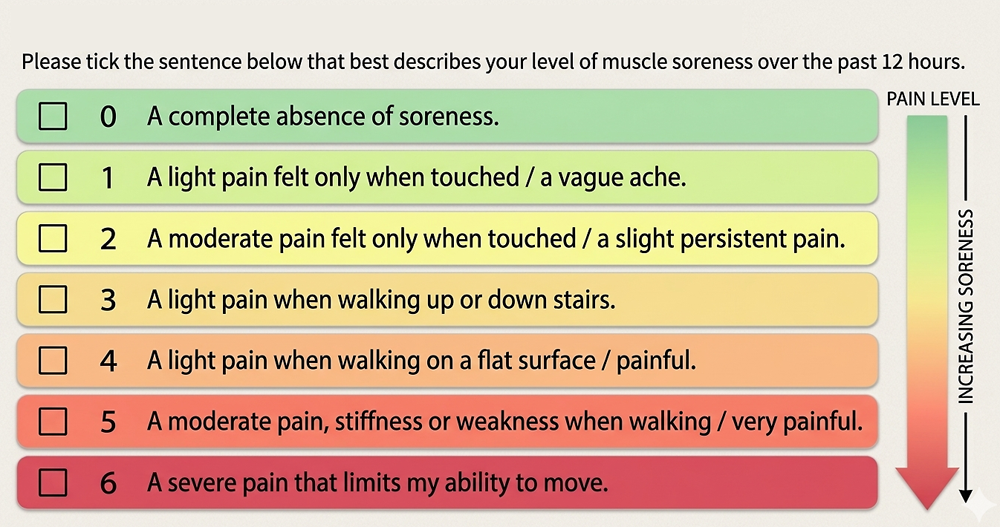
· Delayed onset muscle soreness (DOMS): assessed by a validated questionnaire using a Likert scale ranging from 0 to 6, where 0 indicates no muscle soreness and 6 represents severe pain that may limit movement (see figure 2).
· Perceived recovery status scale (PRS): This measures how athletes feel in themselves mentally. It uses another (validated) Likert-type scale in which a score of 0 indicates very poor recovery or extreme fatigue, 5 represents adequate recovery, and 10 (the maximum score) reflects very good recovery or high energy levels(6).
These measurements were conducted at four different time points, always following the same sequence of testing and procedures to minimize the influence of changing conditions. The first set of measurements was taken at rest, before the start of the HIIT session. Five minutes after completing the HIIT session, the athletes underwent a second evaluation, following the same sequence of tests. Further assessments were conducted at 24 hours and 48 hours after the HIIT session. To avoid interference from additional physical exercise (training), athletes were instructed to refrain from training during the recovery period.
Figure 2: The 0-6 Likert Scale for DOMS
What they found
When all the data was analyzed, the overall finding that emerged was that despite the much shorter distances covered when the runners performed sprint intervals, the burden on the body was markedly higher than when performing short or long HIIT sessions. In particular, the researchers noted:
· Strength and power – immediately after the sprint intervals, the runners’ jump heights and strength dropped significantly (jump height dropped by nearly 10%, and strength by about 7%) - more than when performing short or long HIIT. Importantly, while the other sessions allowed nearly full recovery after 24 hours, the sprint sessions resulted in lower levels of strength and power even after 24 hours – ie the sprint intervals imposed a much heavier neuromuscular demand that took longer to recover from.
· Inflammation - levels of IL-6 stayed high in the sprint group for longer compared to the short and long HIIT sessions. This signals a) that the muscles had taken much more of a ‘beating and b) that the sprinting had created a more systemic stress rather than just affecting the muscles involved.
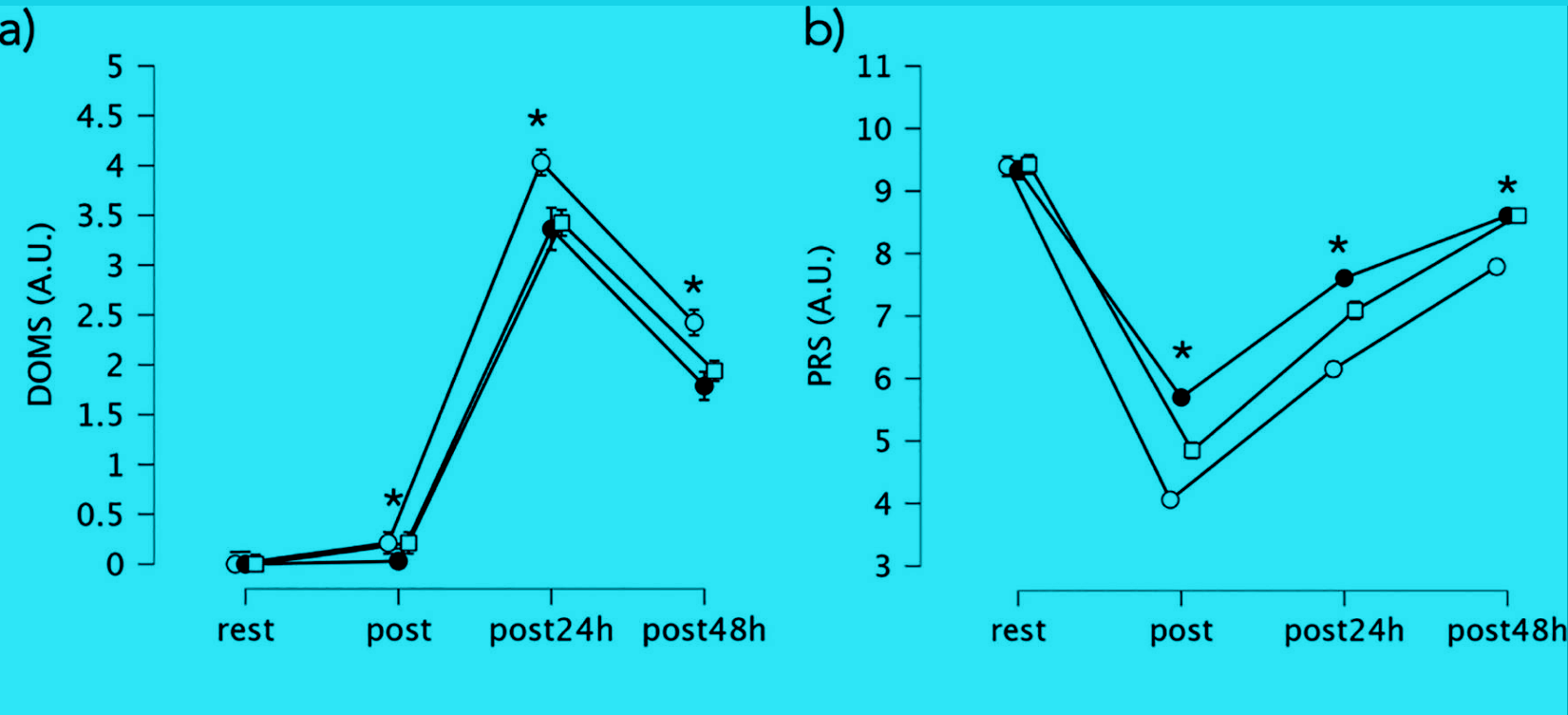
· DOMS – Although taking longer than short or long HIIT sessions, the athletes’ jump heights and strength levels had mostly returned to normal after 48 hours after sprint training. However, this was not the case with muscle soreness, which remained elevated (see figure 3). In short, not only did the sprint training produce more soreness, that soreness hadn’t fully resolved even after 48 hours.
· Perceived recovery – the same pattern was seen with perceived recovery status; while measures of muscular strength/power and inflammation had normalized 48 hours after sprint training, the runner’s perceptions of recovery, freshness and readiness had not (figure 3). This indicates that while the muscles might have recovered, the neurological system needed to drive exercise was still indicating it needed more rest!
Figure 3: DOMS and perceived recovery following sprint, short and long HIIT
Implications for middle-distance runners and other athletes
The main take-home message from this new research is that while it might seem the easiest to perform at the time, it is in fact sprint intervals that will take the biggest toll on your body and demand the longest recovery times. This is likely because while short or long HIIT induces mainly metabolic fatigue, sprint training can induce quite a bit of mechanical fatigue – ie micro damage to muscle and tendons, along with a much more drained neurological system. To recover from this takes more time and will likely leave you feeling more fatigued/drained for longer, making it harder to perform high quality training again.
In practice this means that if you are going to perform sprint intervals in a HIIT session, you need to schedule at least 48 hours to ensure full recovery. Older athletes who typically recover more slowly after hard sessions will likely benefit from a 72-hour recovery to be on the safe side. Given that runners and other athletes will be almost certainly be training on several other days per week, a good strategy is to ensure that the next day’s workout following sprint intervals is a relatively easy session. If you’re older (over 50), it could be wise to schedule in a couple of easier/less intense days before resuming hard training. Another option is to cross training following a sprint-interval days; for example, doing some cycling or swimming if you’re a middle-distance runner.
If your HIIT sessions involve intervals of 30 seconds or longer, you can be more flexible in how you structure the rest of your training. Bear in mind however that HIIT of any duration is still ‘intense’ compared to some longer, slower distance work! The key as always is to self monitor. How you ‘feel’ in terms of recovery or fatigue is actually a remarkably effective way of monitoring your readiness to train again. And when muscles are still stiff or so, that’s a no-no for resuming hard training. In summary, you need to respect the impact that high-intensity sprint intervals have on the body. While it sprint intervals might be short duration, sprinting HIIT is a high-cost activity, and as such requires a much longer recovery period than traditional endurance intervals.
References
1. Eur J Appl Physiol. 2014 Nov;114(11):2427-36
2. Appl Physiol (1985). 2013 Sep;115(6):785-93
3. Open Access J Sports Med. 2014 Oct 17;5:243-8
4. J Strength Cond Res. 2016 Mar;30(3):859-66
5. Sports (Basel). 2021 Jul; 9(7): 92
6. J Strength Cond Res. 2011; 25:620–628

Andrew Hamilton

Latest Issue
Subscribe Today
Newsletter Sign Up
Testimonials
Dr. Alexandra Fandetti-Robin, Back & Body Chiropractic
Elspeth Cowell MSCh DpodM SRCh HCPC reg
William Hunter, Nuffield Health
Subscribe Today

Newsletter Sign Up

Coaches Testimonials
Dr. Alexandra Fandetti-Robin, Back & Body Chiropractic
Elspeth Cowell MSCh DpodM SRCh HCPC reg
William Hunter, Nuffield Health
Subscribe Today
Latest Issue
Keep up with latest sports science research and apply it to maximize performance
Today you have the chance to join a group of athletes, and sports coaches/trainers who all have something special in common...
They use the latest research to improve performance for themselves and their clients - both athletes and sports teams - with help from global specialists in the fields of sports science, sports medicine and sports psychology.
They do this by reading Sports Performance Bulletin, an easy-to-digest but serious-minded journal dedicated to high performance sports. SPB offers a wealth of information and insight into the latest research, in an easily-accessible and understood format, along with a wealth of practical recommendations.
*includes 3 coaching manuals
Get Inspired
All the latest techniques and approaches


Sports Performance Bulletin helps dedicated endurance athletes improve their performance. Sense-checking the latest sports science research, and sourcing evidence and case studies to support findings, Sports Performance Bulletin turns proven insights into easily digestible practical advice. Supporting athletes, coaches and professionals who wish to ensure their guidance and programmes are kept right up to date and based on credible science.
