
 close


 LOGIN
You are viewing 1 of your 1 free articles. For unlimited access take a risk-free trial
Ice bath or hot bath for superior recovery?
Cold water immersion is a popular but somewhat uncomfortable method for speeding post-exercise recovery. But could an old fashioned, and rather more relaxing soak in a hot bath deliver the same benefits? SPB looks at some intriguing new research


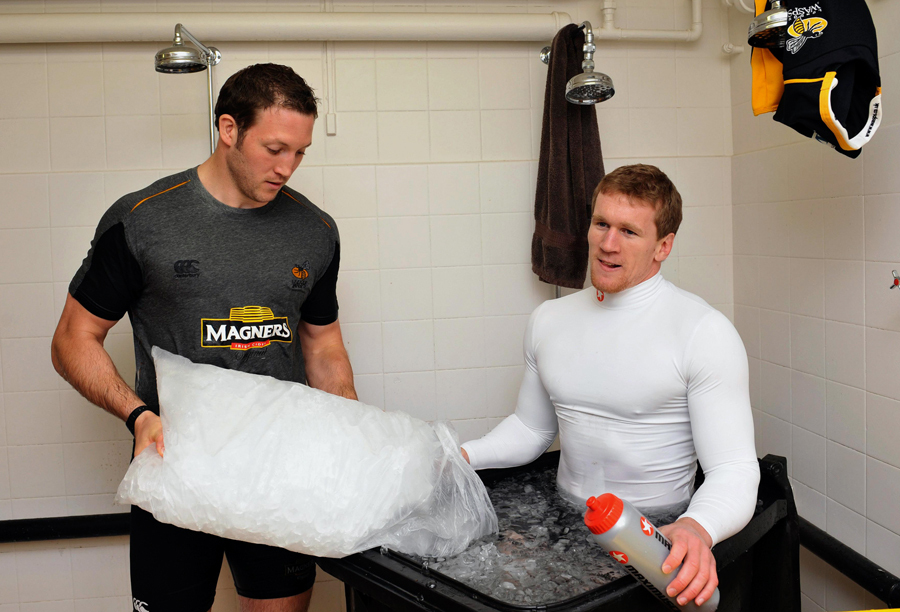
Competitive athletes, especially those who are competing at higher levels, often need to train more than once a day, and on a number of consecutive days. These training demands can make it very difficult for athletes to recover optimally, which can then impair the quality of subsequent high-intensity training sessions. The same is true for athletes who compete in multi-day events; rapid recovery is essential so that an athlete’s performance can be maintained beyond the first day of competition.
The demands of recovery
As we have discussed extensively in other SPB articles, optimum recovery involves adequate physical rest, plentiful sleep and of course good nutrition. However, other therapeutic recovery strategies also exist including massage and foam rolling, which we have also reported on recently – see this article by SPB contributor Andrew Sheaff. Another post-exercise recovery strategy that has gained traction in recent years is ‘cold water immersion’ or CWI for short. The use of CWI involves the athlete immersing themselves for a period of time in cold water (typically around 10-13C [50-55F]) right after training or competition (ice baths take this concept even further!). Compared to other recovery methods such as foam rolling, stretching, massage etc, the use of CWI for accelerating recovery has demonstrated equally high or higher levels of evidence.
The physiological mechanisms that underpin CWI after exercise are complex but primarily involve decreasing the body’s core temperature – not just back to its normal baseline level but to below its baseline level, with a peak drop in core temperature occurring around an hour following immersion. This cooling effect has been shown to help repair exercise-induced muscle damage, with a larger effect for weight-bearing (running and strength training) compared with non-weight-bearing activities(1,2). Scientists believe that the enhanced repair effect is likely to be related to CWI-induced muscle cooling and direct hydrostatic pressure – ie the pressure of water acting directly on the muscles(3). In terms of what this means for athletes, the key benefits of CWI are reductions in delayed onset muscle soreness, edema (fluid accumulation around damaged tissues), and exercise-induced strength loss. In addition, subjective measures of fatigue and recovery are typically improved in the hours and days following CWI(4).
The heat wildcard
Despite the undoubted recovery benefits of CWI, some exercise physiologists have argued that when it comes to training adaptation over a period of weeks or months, cold-water immersion may actually be harmful(5). The reasoning is that although helpful for clearing accumulated lactate from tired muscles, CWI also suppresses inflammation. While this helps to reduce post-exercise muscle soreness, it turns out that inflammation is an essential part of the training adaptation process. During hard exercise, micro-damage occurs within muscles. This damage is repaired during the recovery period but inflammation is an important part of this repair process.
When inflammation is suppressed – for example, by making the muscles very cold after exercise - the recovery process is made more difficult. Furthermore, studies have confirmed that compared to no CWI, athletes who regularly use CWI post-training can experience less muscle strength and growth gains, and reduced training adaptations generally(6-8). By contrast, some researchers have speculated that HEAT applied after exercise might be superior for post-exercise recovery and training adaptation The rationale for this theory is that recent research has shown that hot water immersion (eg a hot bath) following exercise results in a greater release of growth factor and the hormone testosterone, both of which play a role in muscle recovery and adaptation(9).
Cold water vs. hot water
If you’ve ever used CWI for recovery, you will know that it can be a far from pleasant experience. Shivering in cold bath is not only a physical ordeal, it requires mental fortitude – precisely at a time when you might prefer to be relaxing after your gruelling training session! This is not so with hot water immersion in a bath; who after all can say they don’t enjoy climbing into a nice hot bath after a workout and feeling those tight muscles relax. Given the questions surrounding the use of CWI and training adaptation, and the fact that recent evidence points to distinct benefits when hot water immersion is used in recovery, a good question to ask is whether CWI is really worth it? In other words, can hot water immersion produce similar recovery benefits to CWI, and if so, should athletes ditch CWI and enjoy much more relaxing recovery sessions in a hot bath?

New research
This question is exactly what a team of French and Italian scientists set out to investigate in a new study, which was published just three weeks ago in the Journal of Sports Science(10). In this study, the researchers looked at recovery in soccer players - highly pertinent as players often have limited recovery time during congested periods of the season and during soccer tournaments(11). In particular, the researchers wanted to know if CWI was more effective than hot water immersion in promoting recovery post-exercise, and if so, by how much. If you think about it, this is a very important question because if CWI doesn’t deliver meaningful additional benefits over a good old fashioned hot bath, it means that athletes have been slavishly putting themselves through the wringer, enduring cold water immersion for no good reason!
What they did
Twenty-two physically active and fit males were recruited for the study, and underwent a series of baseline tests to measure different aspects of soccer-related performance. These tests, which were also repeated after the exercise task, included:
· Maximal voluntary contraction strength of the quadriceps (thigh muscles) to assess neuromuscular performance.
· Sprinting ability, where speed, maximal power and force were measured during repeated sprints.
· Fatigue characteristics, where the femoral nerve was stimulated to see whether the accumulated fatigue was a result of the brain and nervous system (central nervous system fatigue), or from actual damage to the working muscle fibers of the thigh (so-called peripheral fatigue).
· Post-exercise muscle soreness, measured using standardized questionnaires.
· Perceived recovery, ie how fresh or tired generally the participants felt before and after the exercise task.
The exercise task itself was to complete a simulated football match designed to deliver the same physical stresses that players experience in a real game. This 90-minute task therefore included bouts of high-intensity intermittent running, running with lots of (sudden) changes of direction, bursts of running with rapid decelerations (simulating players having to suddenly stop before changing direction), along with some physical impacts to simulate the localized muscle damage that players encounter during tackles, heading contests and when fending off other players.
All the 22 players underwent pre-task testing and completed the same simulated game, but it was the recovery period that differed:
· Half of the players were assigned to a cold water immersion group, and underwent CWI in water at 13C (55F) immediately after the simulated match, then again at 24 hours and 48 hours post task.
· The other half were assigned to a hot water immersion group and underwent the same immersion protocol but in hot water at 42C (107.5F) at the exact same time intervals.
The participants’ recoveries were then tracked for the 72 hours post match simulation, with the above tests carried out at 24, 48 and 72 hours after the exercise task. The data collected was analyzed to determine what the differences were between the two recovery protocols, and whether CWI was indeed superior to a good old-fashioned hot bath.
What they found
Compared to their baseline (fresh) measurements, all of the players took a big hit in performance following the match simulation, proving that it had done its job! Overall, the players experienced a 7.0% drop in maximum thigh strength, which was shown to be as a result of peripheral fatigue (thigh muscle damage) rather than more general central nervous system fatigue. In addition, measures of sprint performance declined by nearly 9% when measured 24 hours post simulation. This was accompanied by a large increase in post-exercise muscle soreness when measured at 24 and 48 hours post simulation.
But how did the two groups compare? This was the key finding because the analysis showed absolutely zero difference in any of the markers of fatigue/recovery during the 72-hour recovery period. Regardless of whether the players had undertaken cold or hot water immersion at 0, 24 and 48 hours post match simulation, their recovery trajectories in terms of muscle strength, muscle soreness, sprinting ability and force/power generation, and were virtually identical. Both methods almost certainly helped the participants to recover - although there was no control group undertaking neither cold nor hot water immersion to properly test this - but what was certain was that neither of the two immersion protocols was superior to the other.
Implications for athletes
Before we discuss the practical implications, we need to add a couple of caveats regarding this study. Firstly, as mentioned above, there was no control group (ie those who did neither cold nor hot water immersion), so while there was no difference between recovery in the hot and cold groups, we can’t be 100% sure that either was better than doing no immersion at all. But given the large body of existing evidence supporting cold water immersion for recovery, this is very unlikely. Another caveat is that the participants were not highly-trained soccer players but rather just fit, trained men. It could be that in those who have excellent training specificity for soccer, the results might have been slightly different. Having said this, the same physiological principles are at play so it is still highly likely that they are relevant, especially for those who play soccer at less than the elite level (ie the vast majority of players).
The main take-home message then is that is shivering in cold water after training is not to your taste, this study suggests you don’t need to. Instead, you can run yourself a nice hot bath, soak those muscles to relax them and know that by doing so, you are getting just as much benefit as sitting in a cold bath! Another implication concerns logistics; for coaches and clubs that use very cold water immersion (ie iced baths), switching to hot baths is much simpler than accessing dozens of kilos of ice to add to a cold water bath!
Something else that should not be overlooked here is the psychology of recovery. Enjoying a long soak in a hot bath is incredibly relaxing, and after exercise is known to lower levels of cortisol, your body’s main stress hormone(12). Since stress reduction is known to enhance sleep quality, and getting plenty of high-quality sleep is essential for optimum recovery, using hot water immersion likely provides a hidden benefit compared to CWI, especially following evening training sessions. All in all then, if you enjoy cold baths, go for it, but if like me, you much prefer a relaxing soak in a hot steaming bath, you can do so knowing that it’s also accelerating your recovery!
References
1. Sports Med. 2016 Aug; 46(8):1095-109
2. Int J Sports Physiol Perform. 2011 Jun; 6(2):147-59
3. Br J Sports Med. 2012 Mar; 46(4):233-40
4. Int J Sports Physiol Perform. 2008 Sep; 3(3):331-46
5. Cochrane Database of Systematic Reviews 2012, Issue 2. Art. No.: CD008262
6. Journal of Physiology 2015. 50 593(18)
7. Eur J Appl Physiol (2006) 96: 572–580
8. Front Sports Act Living. 2021 Jul 16:3:714148
9. Eur J Appl Physiol. 2024 Apr 13;124(9):2615–2628
10. J Sports Sci. 2026 Aug 23:1-11. doi: 10.1080/02640414.2026.2713869. Online ahead of print
11. Res Sports Med. 2017 Oct-Dec;25(4):408-420
12. Scand J Med Sci Sports. 2024 Mar;34(3):e14600

Andrew Hamilton

Latest Issue

Subscribe Today
Newsletter Sign Up
Testimonials
Dr. Alexandra Fandetti-Robin, Back & Body Chiropractic
Elspeth Cowell MSCh DpodM SRCh HCPC reg
William Hunter, Nuffield Health
Subscribe Today
Newsletter Sign Up

Coaches Testimonials
Dr. Alexandra Fandetti-Robin, Back & Body Chiropractic
Elspeth Cowell MSCh DpodM SRCh HCPC reg
William Hunter, Nuffield Health
Subscribe Today
Latest Issue
Keep up with latest sports science research and apply it to maximize performance
Today you have the chance to join a group of athletes, and sports coaches/trainers who all have something special in common...
They use the latest research to improve performance for themselves and their clients - both athletes and sports teams - with help from global specialists in the fields of sports science, sports medicine and sports psychology.
They do this by reading Sports Performance Bulletin, an easy-to-digest but serious-minded journal dedicated to high performance sports. SPB offers a wealth of information and insight into the latest research, in an easily-accessible and understood format, along with a wealth of practical recommendations.
*includes 3 coaching manuals
Get Inspired
All the latest techniques and approaches


Sports Performance Bulletin helps dedicated endurance athletes improve their performance. Sense-checking the latest sports science research, and sourcing evidence and case studies to support findings, Sports Performance Bulletin turns proven insights into easily digestible practical advice. Supporting athletes, coaches and professionals who wish to ensure their guidance and programmes are kept right up to date and based on credible science.
