
 close


 LOGIN
Cross training: the perfect run-bike formula

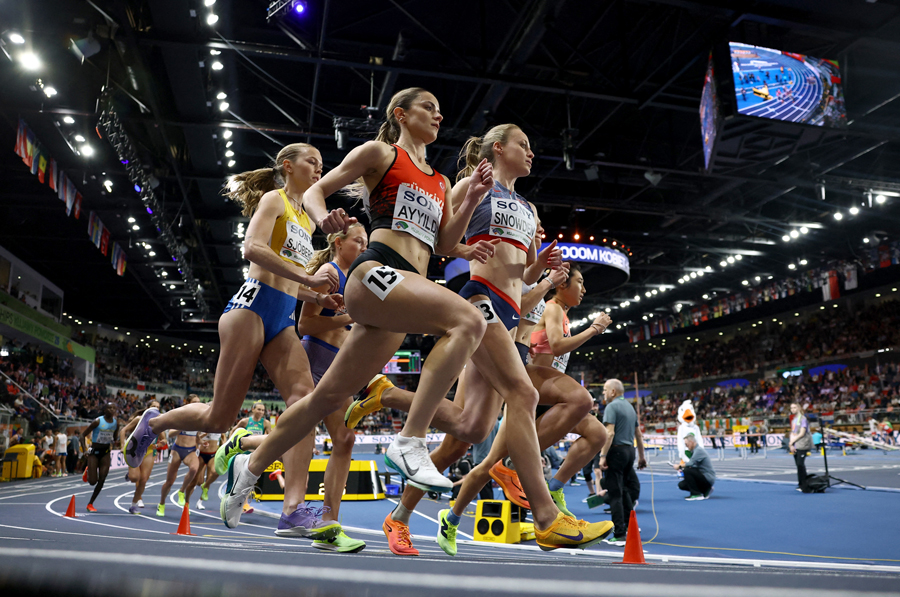
Cross-training is widely used by endurance athletes as a means of complementing their main endurance activity with another type of endurance activity. For example, it’s common for cyclists to add some running sessions in the winter months to maintain cardiovascular fitness when getting out on the road might be difficult. Meanwhile, runners frequently use cycling as a supplement to their running training as a way of helping to prevent or rehab an injury and developing muscle strength, while maintaining cardiovascular fitness(1). In addition, cross-training is commonly used more generally to manage fatigue and reduce cumulative musculoskeletal stress while maintaining high levels of cardiovascular stimulus during more demanding periods of a training program(2).
Running/cycling questions
Research on athletes shows that among endurance athletes, running and cycling is the most common cross-training combination - not just because these activities share very similar aerobic demands (although differing in their mechanical loading characteristics), but also because of the growth in popularity of sports such as triathlon and biathlon(3). However, while the cardiovascular and conditioning benefits of running and cycling are well understood when each is practiced in isolation, there are big questions about their use optimal use when cross training. These questions include:
· How should athletes whose prime activity is running best adjust the duration and frequency of a cycling session they substitute in to replace a running workout? And how should athletes who mainly cycle set the optimum parameters for a running session?
· How does training intensity affect the way running and cycling should be substituted for each other?
· Do the perceptions of the above differ between athletes and coaches? In other words, do coaches really understand the demands placed on athletes who have to regularly substitute one kind of training session for another?
These are all valid questions because while laboratory data on the physiological outcomes of different or mixed training modes is very useful, it cannot account for the practical experiences of athletes who cross train, or whose sports involve more than one endurance sport.
New research
To try and provide some clarity on this issue, a team of German researchers has investigated how cross-training between running and cycling is perceived and applied by endurance athletes and coaches, with a particular focus on direction-dependent transferability, training intensity, training frequency, and perceived equivalence durations(4). Published in the journal ‘Frontiers in Sport and Active Living, this study set out to answer a key question for cross-training practitioners – ie how effectively can running replace cycling sessions and vice-versa, and how can athletes who cross train and their coaches best convert the training load of one kind of session into another type?
To carry out this study, 55 high-performance endurance athletes and coaches were recruited through personal and professional networks, regional and national sport federations in Germany, Austria, and Switzerland, and various high-performance training centers, including some athletes who were both training themselves and coaching other athletes. Participants were drawn from primarily triathlon (42 participants) - with additional representation from running and cycling (7 and 6 participants respectively). Athlete selection was not intended to proportionally represent different endurance disciplines; rather it deliberately focused on triathletes, as they frequently replace running sessions with cycling, or vice versa, for example as part of training planning, injury management, or load regulation.
What they did
The 55 participants were asked to complete detailed, standardized questionnaires about their training habits – particularly about how they substituted one session type for another (ie a run for bike session or bike for run session). The goal was to find out how these substitutions were made – for example, when substituting a 2-hour bike ride for a run instead, what length of run and how intense did they deem as suitable to generate an equivalent training effect? And how did this change as the duration of the session to be substituted increased? Also, what about frequency adjustments – ie when swapping one mode of training for another, how did that affect the frequency of planned training sessions that week?
The questionnaire presented standardized scenarios (such as swapping a run for a bike ride) and asked the athletes and coaches to estimate equivalent training times and session frequencies. To measure the participants’ opinions and perceptions consistently, the questionnaire relied heavily on ‘Likert’ scales (see figure 1). A Likert scale presents the responder with a fixed range of answering options to rate how strongly they agree with a statement, how positively or negatively they regard a product or service, or how suitable they find an option. Instead of simple yes/no answers, participants typically chose from a 5-point rating scale, such as:
· Strongly disagree
· Somewhat disagree
· Neither agree nor disagree
· Somewhat agree
· Strongly agree
Figure 1: An example of a ‘1-5’ Likert scale commonly used in questionnaires
You need to be logged in to continue reading.
Please register for limited access or take a 30-day risk-free trial of Sports Performance Bulletin to experience the full benefits of a subscription. TAKE A RISK-FREE TRIAL

Andrew Hamilton

Latest Issue
Subscribe Today
Newsletter Sign Up
Testimonials
Dr. Alexandra Fandetti-Robin, Back & Body Chiropractic
Elspeth Cowell MSCh DpodM SRCh HCPC reg
William Hunter, Nuffield Health
Subscribe Today

Newsletter Sign Up

Coaches Testimonials
Dr. Alexandra Fandetti-Robin, Back & Body Chiropractic
Elspeth Cowell MSCh DpodM SRCh HCPC reg
William Hunter, Nuffield Health
Subscribe Today
Latest Issue
Keep up with latest sports science research and apply it to maximize performance
Today you have the chance to join a group of athletes, and sports coaches/trainers who all have something special in common...
They use the latest research to improve performance for themselves and their clients - both athletes and sports teams - with help from global specialists in the fields of sports science, sports medicine and sports psychology.
They do this by reading Sports Performance Bulletin, an easy-to-digest but serious-minded journal dedicated to high performance sports. SPB offers a wealth of information and insight into the latest research, in an easily-accessible and understood format, along with a wealth of practical recommendations.
*includes 3 coaching manuals
Get Inspired
All the latest techniques and approaches


Sports Performance Bulletin helps dedicated endurance athletes improve their performance. Sense-checking the latest sports science research, and sourcing evidence and case studies to support findings, Sports Performance Bulletin turns proven insights into easily digestible practical advice. Supporting athletes, coaches and professionals who wish to ensure their guidance and programmes are kept right up to date and based on credible science.
