
 close
close


 LOGIN
LOGINYou are viewing 1 of your 1 free articles. For unlimited access take a risk-free trial
Runners: time to add some bounce to your stride
Rick Lovett explains the ‘bowstring effect’, and how runners can harness it to run faster and more efficiently


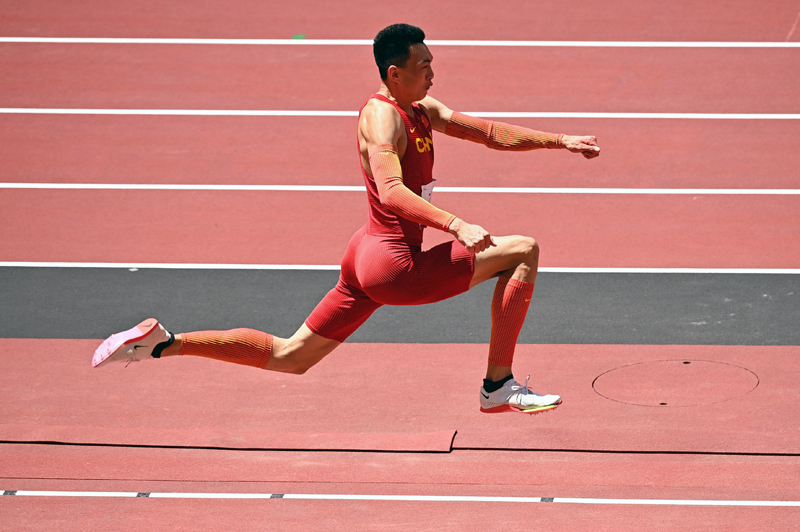
Distance runners obsess over aerobic fitness. This is not surprising because VO2max - the traditional measure of aerobic horsepower - is an important factor in determining your sustainable speed. The more oxygen your heart, lungs and muscles are capable of processing at peak effort, the more energy your body can expend when you need it. However, that’s not the only thing it takes to make run you fast. You also need to be able to apply that energy efficiently to the task at hand.
I recall a colleague of mine who was national-class 5km runner. She was significantly faster than me. But when I took her on her first-ever cross-country ski outing, she lacked the skill to use her skis efficiently. Her powerful aerobic engine allowed her to blow out a tremendous amount of energy, but much of it went into slipping, recovering, and floundering – so much so that I, a former ski racer, could easily keep up with her, with considerably less effort. The same scenario can often be observed in the pool. Some people thrash, splash and go nowhere, slowly. Others glide through the water with no apparent effort.
An efficient athlete goes faster for the same energy expenditure. That’s particularly true in technique-oriented sports like cross-country skiing and swimming, but it also applies to running, where overstriding or an awkward arm swing can impede your optimum stride efficiency
Efficiency rules
What we’re talking about is efficiency. The efficient athlete goes faster for the same energy expenditure. That’s particularly true in technique-oriented sports like cross-country skiing and swimming, but it also applies to running, where overstriding or an awkward arm swing can impede your optimum stride efficiency.
For technique-oriented people, it’s tempting to think of running as all about stride. After all, running speed is the product of two simple things: stride length and turnover. If I run 180 two-meter strides per minute, I’ll cover 400 meters in 66.7 seconds. If I lengthen my stride to 2.05 meters, but in the process reduce my turnover to 173 strides per minute I’ll clock the same 400 at 67.7 seconds. That much is simple maths. Our error is when we think we can maximize it by focusing solely on technique. Yes, technique plays a role. But there’s another piece of the puzzle, which we can think of as physics. – or biophysics, to be precise.
Biophysics of energy return
When you run, a lot of things happen with each stride. The most obvious is that your muscles contract with each takeoff, powering you into the next stride. On landing, the same muscles cushion the impact, protecting your joints. But in the interim between landing and takeoff, your muscles, tendons, and related tissues are stretched.
Consider, for example, the Achilles tendon (see figure 1). Whether you are a heel striker or a forefoot striker, as your foot comes down and rolls forward, there is a point at which your foot dorsiflects, meaning that your toes come closer to your shin. This stretches your calf, including the Achilles tendon. When you take off, the reverse happens, as you extend the foot during toe-off. In the process, energy is stored in the stretched calf and Achilles tendon, especially (according to much research) in the tendon. When you take off into the next stride, the stretched tissues recover, like a spring, returning energy to your stride.
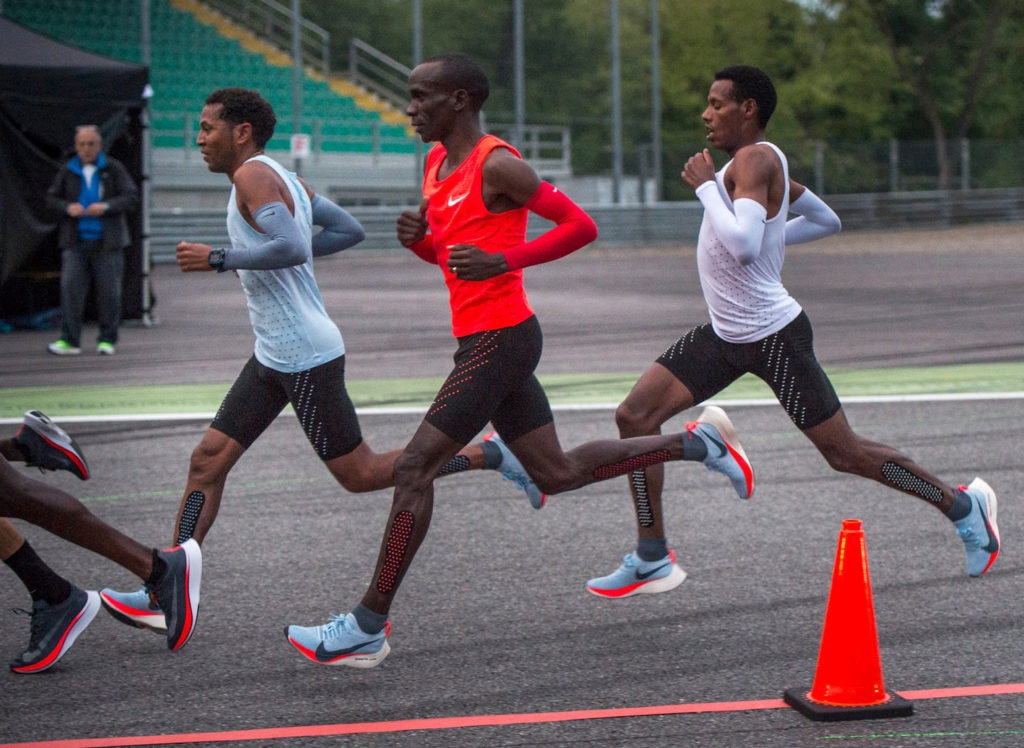
Heel cushioning in shoes can do the same thing. According to a study done for Runner’s World by Biomechanica, a research lab in Portland, Oregon, the best commercially available midsole materials return up to 70 percent of the energy of impactJonathan Beverley, “The Truth About Energy return in Your Shoes,” Runner’s World (online), October 15, 2015.. Trying to improve this is part of what Nike was attempting in its attempt to help a group of elite African runners run a sub 2-hour marathon last May in Monza, Italy. This shoe (dubbed the Zoom VaporFly Elite – see figure 2) was not only superlight, it also included the best energy-returning materials that Nike’s scientists could provide, along with a carbon-fibre plate designed to further reduce energy returnAdam Elder. Nike Unveils Shoes Designed to Run a Sub-2-Hour Marathon. Competitor, March 7, 2017..
FIGURE 1: ACHILLES TENDON
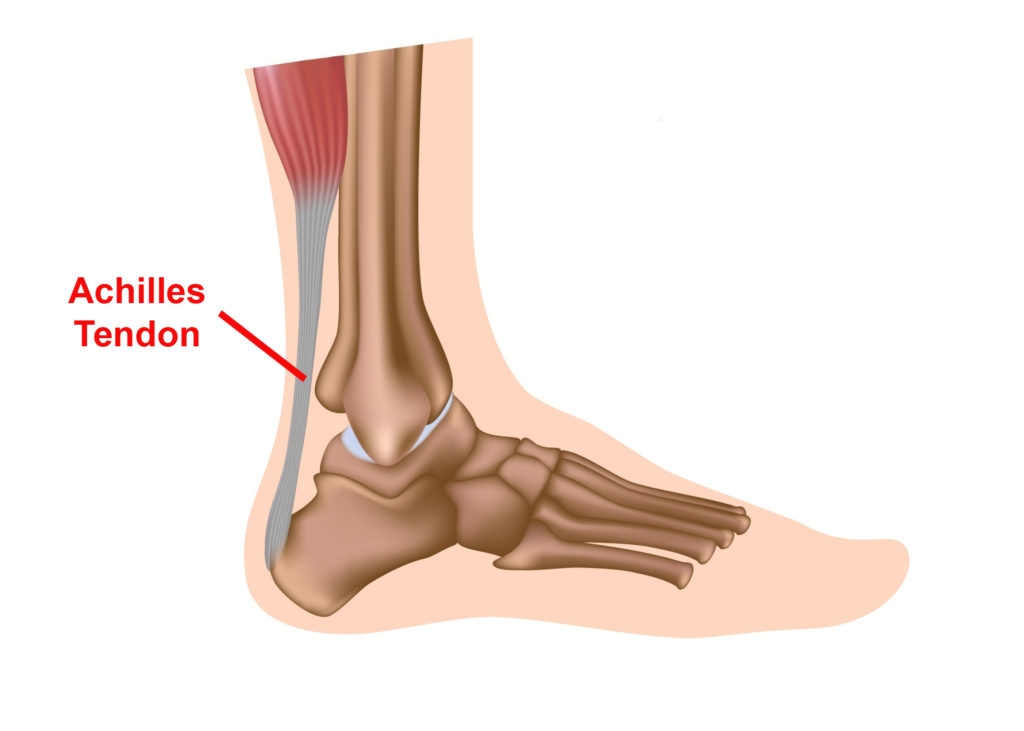
FIGURE 2: NIKE’S ZOOM VAPORFLY ELITE AT MONZA
The most important spring
Strangely, it turns out that neither fancy shoes nor the Achilles tendon appear to be the most important factors in energy return. The Biomechanica study above found that the difference between the best energy-returning shoes and more average ones was only about one percent of the total amount of the overall energy involved in running. And recent research from scientists at the University of Calgary, Alberta, suggests that the Achilles may not play as great a role as we thoughtJ Appl Physiol, 15 Jan 2015; 118(2): 193–199. DOI: 10.1152/japplphysiol.00732.2014. Instead, the most important spring-like structure for runners may be something known as the ‘plantar aponeurosis’.
Aponeuroses are ribbon-like sheets of tendon-like connective tissue. (The name has nothing to do with psychology or neuroscience, but instead comes from the Greek word ‘neuron’,for ‘sinew’.) Aponeuroses exist in the abdomen, back, hips, scalp, and a number of other places; if you look at anatomical diagrams and see broad swathes of white-coloured tissues, they are probably aponeuroses. The major difference between an aponeurosis and a tendon is that tendons connect muscles to bones, while aponeuroses are broad layers of connective material that hold everything together.
Like tendons, aponeuroses turn out to be stretchy. Matthew Walsh, a physical therapist and strength coach at P.A.C.E Therapeutic Associates in Portland, Oregon, likens them to trampolines, which can stretch not just lengthwise but in any direction required.
One of the most important of these for runners is the plantar aponeurosis, which incorporates many of the connective tissues on the bottom of the foot, linking everything from the big toe to the heel (see figure 3). If you’re thinking that this sounds a lot like the plantar fascia, you’re correct - indeed some reports use the two terms interchangeably.
FIGURE 3: THE PLANTAR APONEUROSIS
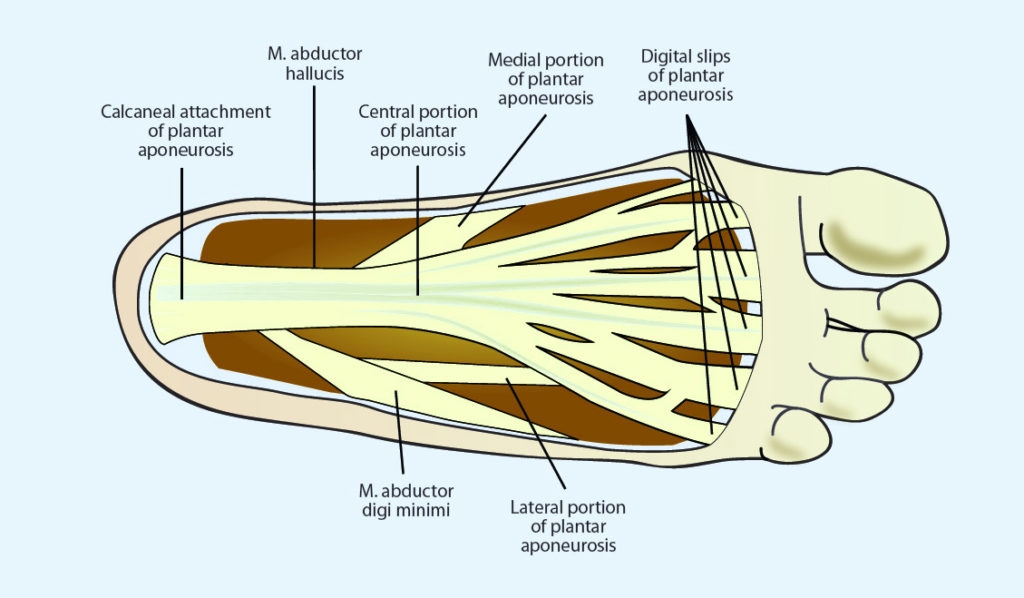
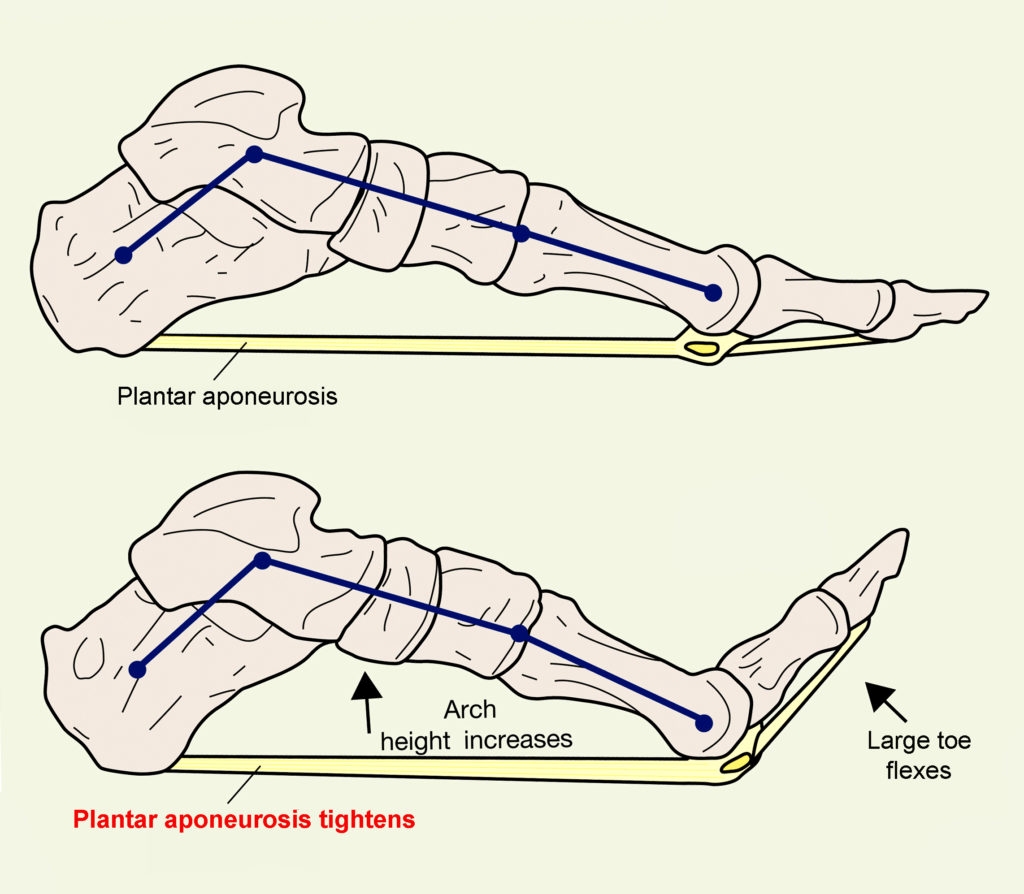
When you run, a fairly important sequence of events happen to this plantar aponeurosis structure – a sequence that has been known for decades as the ‘windlass mechanism’J Anat. 1954;88:25–30. This sequence begins as your foot rolls forward on impact, flexing the toes, particularly the big toe. That flexion stretches the plantar aponeurosis, in the process shortening the foot and causing the arch to rise. You could compare it to tightening the string on an archer’s bow (see figure 4). As you rebound into the next stride, this process is reversed. Your big toe now straightens, allowing the stored energy to be released, helping to propel you forward at the moment of toe-off. It all happens naturally, with no attention to technique.
It’s called the windlass effect most likely because the scientist who discovered it, John H. Hicks of the University of Birmingham was into ships. In sailing, a windlass is a mechanism that uses a cable coiled around a drum to winch in a cable, as in raising an anchor. Here, the cable is the aponeurosis and the drum is the rounded surface of the metatarsal heads. But whether you think in terms of boats, trampolines, or bowstrings, the effect is the same: the plantar aponeurosis stretches on impact and contracts on takeoff. In terms of your foot-strike pattern and benefits, it doesn’t seem to matter if you are a heel striker or a forefoot striker. A 2016 study had eight subjects run at 3.1 meters/ second (5mins:38secs per kilometer) landing on either their heels or their forefoot. Although the initial stretching process of the plantar aponeurosis was different in the two stride patterns, by the time the runner got to takeoff, the study found that both stride patterns produced similar same power releases from the plantar aponeurosisJ Biomech. 2016 Mar 21;49(5):704-9. DOI: 10.1016/j.jbiomech.2016.02.023.. Another study, in Nature’s Scientific Reports, used insoles to alter the windlass mechanism in 17 runners’ foot motions. The researchers found that the insoles helped to increase windlass energy return resulting in a contribution of 6% of overall running energy, regardless of whether the runners were forefoot or rearfoot strikersScientific Reports 6, Article number: 19403 (2016). DOI: 10.1038/srep19403.. To put that in perspective, 6% is the difference between running a 20-minute 5km or running it in 18mins:48secs. The windlass mechanism is important!
FIGURE 4: THE WINDLASS EFFECT
APPLYING THE THEORY
To derive maximum benefits, runners should aim to make their plantar aponeuroses as strong and resilient as possible. Not that you can do that directly, but you can work on the associated muscles. This may be part of why bounding-type exercises (plyometrics – see issue 357 for an in-depth discussion) may help make you faster, so long as you don’t overdo them. But plyometrics isn’t the only thing that can help.
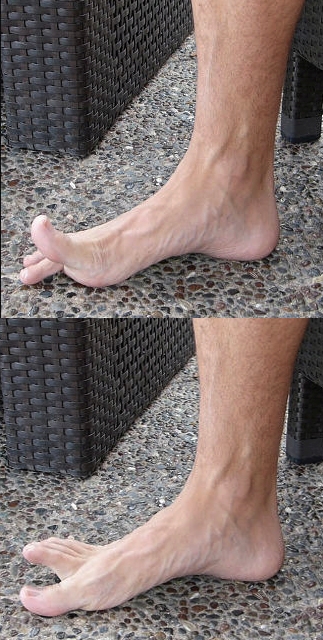
One option is to work on your big toe using ‘toe yoga’. This can be done sitting barefoot with your foot flat on the ground (see figure 5). Raise your big toe only (top), then drive it back down, while at the same time elevating the other toes (below). Do this back-and-forth, several times. If nothing else, this exercise will work the flexor hallux longus, one of the key muscles involved in helping the big toe power you through your stride. But it may also help train the plantar aponeurosis to absorb and release energy, stride after stride after stride.
The main focus however should be on identifying and correcting flexibility problems that prevent the plantar aponeurosis from functioning at its very best. British coach and IAAF consultant Peter Thompson, says that runners need to have sufficient mobility in three key joints: hip, ankle, and big toePeter John L. Thompson. Current Perspectives of Biokinetics in Middle and Long Distance Running—An Examination of the ‘Elastic Response.’ IAAF Technical Quarterly, January 2017.. The reasoning is as follows:
- Hip flexibility, particularly in the hip flexors, is needed to get enough extension into your stride so that the aponeurosis stretch doesn’t end prematurely.
- A lack of flexibility in the ankle can cause premature ‘heel off’, also reducing energy storage in the plantar aponeurosis.
- Sufficient big toe flexibility is also vital to fully engage the windlass mechanism.
FIGURE 5: TOE YOGA EXERCISE TO PROMOTE FLEXOR HALLUX LONGUS STRENGTH
ASSESSING HIP FLEXOR MOBILITY
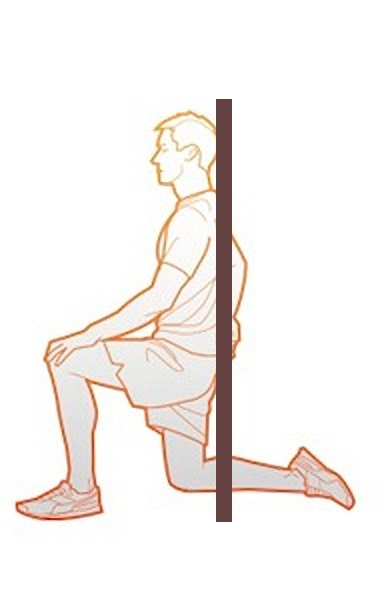
To assess your hip flexor mobility, you can try something called the ‘doorjamb test’, in which you get down on one knee with your back to a doorframe or other tall narrow object (for example the edge of an open door). To perform this test:
- Begin by positioning yourself on one knee, with the down knee in line with the doorframe. Place the other leg in front of you, foot flat on the ground, shin vertical and the thigh level. Move forward or back so that your buttocks and upper back touch the door or doorframe (see figure 6).
- Now, flatten your back against the doorframe. If this movement creates a stretch in your hip flexor muscle (of the leg with the knee on the ground), it’s too tight.
- Repeat with the other leg.
FIGURE 6: DOORJAMB TEST
ASSESSING ANKLE FLEXIBILITY
- For assessing ankle flexibility, try the following:
- Sit barefoot, with your heel flat on the ground opposite a wall.
- Now, slide your buttocks forward on the chair until your knee just touches the wall but try to keep your heel flat on the floor.
If you can’t do this without raising your heel off the ground, your ankles lack flexibility. The solution is to stretch and/or foam roll your calves. If you have a sense that your ankle joint is binding on the front side of the ankle - rather than simply lacking flexibility in the calf/Achilles, you may have a structural problem in the joint that you can’t address on your own via stretching. If this is the case, it is worth consulting a physiotherapist.
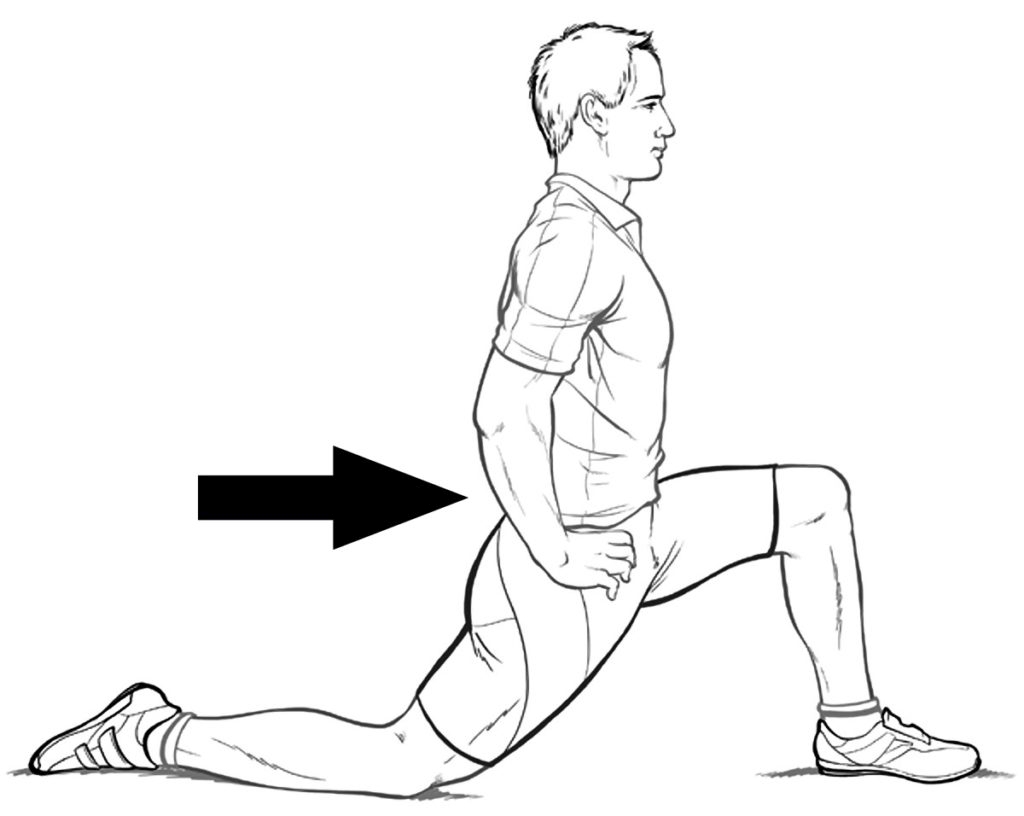
FIGURE 7: HIP FLEXOR STRETCH
ASSESSING BIG TOE FUNCTION
To assess big toe function:
- Put the foot flat on the floor.
- Reach down, and pull the toe up.
- Try to lift the toe up to an angle of around 30 degrees from the floor.
If you can’t achieve that angle, your plantar aponeurosis is too tight. Toe yoga may help, but don’t attempt super-vigorous stretching because there’s a risk of damaging yourself. Instead, try self-massage, either by hand, or with foot roller or a golf ball. Another option is to gently stretch the toe, but never going to the point of pain. However, you shouldn’t expect dramatic progress overnight. According to advocates of this technique, this type of stretching takes 3-5 minutes a day of work, 4-6 days a week for about ten weeks before you see resultsJay Dicharry, Anatomy for Runners: Unlocking Your Athletic Potential for Health, Speed and Injury Prevention. Skyhorse Publishing New York, USA (2012). Finally, if (or when) you pass these tests, don’t invest endless extra time stretching. The key is to ensure you have enough range of motion to run – not to increase flexibility for its own sake.

Latest Issue
Subscribe Today
Newsletter Sign Up
Testimonials
Dr. Alexandra Fandetti-Robin, Back & Body Chiropractic
Elspeth Cowell MSCh DpodM SRCh HCPC reg
William Hunter, Nuffield Health
Subscribe Today

Newsletter Sign Up

Coaches Testimonials
Dr. Alexandra Fandetti-Robin, Back & Body Chiropractic
Elspeth Cowell MSCh DpodM SRCh HCPC reg
William Hunter, Nuffield Health
Subscribe Today
Latest Issue
Keep up with latest sports science research and apply it to maximize performance
Today you have the chance to join a group of athletes, and sports coaches/trainers who all have something special in common...
They use the latest research to improve performance for themselves and their clients - both athletes and sports teams - with help from global specialists in the fields of sports science, sports medicine and sports psychology.
They do this by reading Sports Performance Bulletin, an easy-to-digest but serious-minded journal dedicated to high performance sports. SPB offers a wealth of information and insight into the latest research, in an easily-accessible and understood format, along with a wealth of practical recommendations.
*includes 3 coaching manuals
Get Inspired
All the latest techniques and approaches


Sports Performance Bulletin helps dedicated endurance athletes improve their performance. Sense-checking the latest sports science research, and sourcing evidence and case studies to support findings, Sports Performance Bulletin turns proven insights into easily digestible practical advice. Supporting athletes, coaches and professionals who wish to ensure their guidance and programmes are kept right up to date and based on credible science.
