
 close


 LOGIN
Velocity-loss training: making it work for endurance
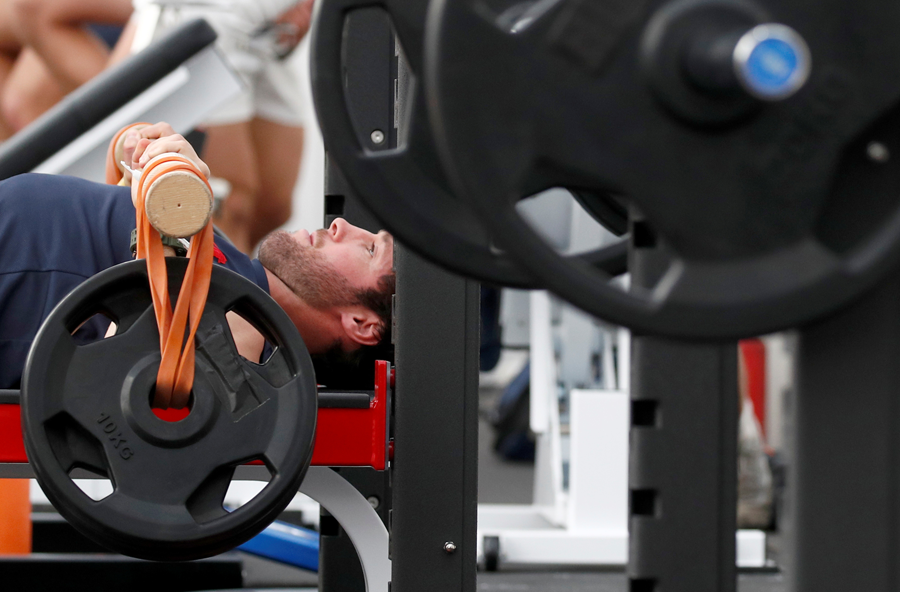
In almost every case, athletes perform some sort of concurrent training by seeking to improve performance through both endurance and strength training. However, over the years, research has consistently demonstrated that mixing these two training types in the same program can compromise the outcomes achieved as compared to when either one is performed alone. This is known as the ‘interference effect’. However, the presence of compromised outcomes and the magnitude of these compromises tend to differ depending on the context. Initial research simply took a good endurance training program, a good strength training program, and had the research subjects perform both at the same time. Unsurprisingly, a lot of fatigue was generated as this was a lot of work! As more intelligent training programs were used over time, it became evident that a large component of the interference effect could be limited by controlling fatigue.
Enter velocity-based training
Over the last several decades, a style of resistance training has emerged known as ‘velocity-based training’. Due to the almost linear relationship between the speed of a resistance training movement and an individual’s proximity to failing to complete another repetition, it’s possible to precisely control how much fatigue an individual experiences during resistance training. For instance, if the velocity of movement is only allowed to drop 20% from the initial velocity, much less fatigue will be generated within a set as compared to if the drop off is 50%.
While it seems like it would be great to use this approach to limit velocity losses and thus fatigue to maximize endurance training outcomes during concurrent training, fatigue is necessary for improving strength and in particular, hypertrophy. Too much fatigue may compromise endurance training outcomes, and too little may compromise strength training outcomes. What’s the sweet spot during concurrent training? Velocity based training provides researchers with a tool to ask and answer this question, and a group of researchers have done just that.
New research
A group of Spanish and Brazilian researchers sought to determine how a range of velocity loss thresholds differentially impact strength and endurance adaptations during concurrent training(1). The core purpose of the study was to test the effect of a combination of velocity loss threshold-based resistance training and intense aerobic training on both strength training and endurance training outcomes. Importantly, they wanted to know if using a different velocity loss threshold alters the strength and endurance adaptations that occur during concurrent training.
The researchers recruited 41 moderately trained men to participate in the study. The subjects had a mean age of 25 years and were considered moderately trained. Their average back squat was 108 kilograms, and the average maximal aerobic speed was 15.7 kilometers/hour. While not particularly impressive numbers, they do indicate the subjects had a solid training background. As we’ll discuss later, this is somewhat relevant when considering how to apply the results of the study to your own training. All subjects had at least one year of resistance training experience with the squat exercise, and were free from injuries and limitations that would potentially prevent them from performing the training program.
What they did
All subjects performed the same basic training program throughout the 8-week study. The subjects trained twice per week with 48 hours or more between training sessions. Each training session consisted of strength training followed by a 10 minute break, which was then followed by endurance training. All resistance training was performed using the squat. The intensity of resistance training began at 70% and increased by 5% every 4 workouts, with the final sessions performed at 85%. As the resistance training was velocity-based, the specific load used was assigned based upon the velocity the subjects were expected to be able to use. The subjects performed three sets each training session and took three minutes of rest between sets. The key difference between the groups was how the different groups performed the resistance training:
- The 0%VL group trained with a velocity loss threshold of zero. In other words, their sets were terminated after one repetition as soon as repetition speed began to slow even by a tiny amount once the set was initiated.
- The 15%VL group trained with a 15% velocity drop off, meaning that sets were terminated once the initial velocity dropped by 15%. This allowed the subjects to perform more repetitions and experience more fatigue than the first group.
- The 40%VL group used a 40% velocity drop off, allowing the repetition velocity to decrease by 40% before stopping the set. Again this resulted in even more repetitions and more fatigue being generated.
- A control group who performed no strength training at all.
In all cases, velocity feedback was given to the subjects after each repetition so that they understood how they were performing.
While only three of the four groups performed resistance training (described above), all of the four groups performed the same endurance training. As the purpose of the study was to investigate the impact of different resistance training strategies on endurance performance, it was important that the endurance training protocols were standardized:
- For the first two sessions, subjects performed 3x6-minute running efforts at 90% of maximal aerobic speed and performed 4 x repetitions of the same during the next two sessions.
- They then performed 3 x repetitions of 4-minutes at 95% of maximal aerobic speed during the following two sessions, adding a fourth repetition for the next two sessions.
- Every two sessions, the program continued to progress, moving to 4 x 2-minutes at 100% of maximal aerobic speed, 5 x 2-minutes at 100% of maximal aerobic speed, 6 x 1-minute at 105% of maximal aerobic speed, and finally 8 x 1-minute at 105% of maximal aerobic speed.
- Rest interval durations were 4-minute for the first four sessions, 2-minute for the next four sessions, and 1-minute for the final eight sessions.
Prior to and after the training the program, all subjects performed the same battery of tests to evaluate changes in physiological adaptation and performance. To optimize performance across the various tests by limiting the impact of fatigue, the subjects were tested on two separate days, with 72 hours or more between testing days. To measure changes in muscle hypertrophy (growth), ultrasound scans of the vastus lateralis (outer thigh) were taken. To test maximal sprinting speed, the subjects performed 2 x 20-meter sprints. Maximal aerobic speed was calculated through a treadmill test where the speed was started at 8.0km/hour and increased by 0.1km/hour every 12 seconds until exhaustion. The highest speed achieved, minus 0.5 km/hour was designated as the maximal aerobic speed. This value was also used to prescribe running intensities in the training program described above.
The second testing day focused on strength and neuromuscular performance. The subjects first performed 5 separate maximal countermovement jumps to assess jumping ability. They took 45 seconds rest between jumps and the highest and lowest jumps were excluded, with the remaining 3 averaged together. Next, the isometric squat tests were performed on a force plate. This allowed the researchers to calculate the maximal isometric force, the maximal rate of force development, and the rate of force development at different time periods. To test maximal squatting capabilities, subjects continued to increase the weight by 2.5-5 kilograms until bar velocity dropped below 0.5m/s during a successful repetition. Finally, the subjects performed as many squat reps as possible with 70% of their maximal squat, with the set terminating when bar velocity dropped below 0.5 meters/second.
What they found
Once the subjects performed all the testing and all the training, the researchers crunched the numbers looking for findings of interest, of which there were many. One obvious difference between the resistance training groups was the total number of repetitions performed over the course of the training intervention, with the VL0 group performing 48, the VL15 performing an average of 152, and the VL40 group performing an average of 297.
In terms of muscle mass, all three resistance training groups improved muscle mass even the VL0 group. However, the VL40 group achieved the largest improvements in muscle mass, which is unsurprising given the relationship between hypertrophy and fatigue. The endurance-only group did not increase muscle mass at all. In addition, this group saw no improvements in sprint speed and jumping ability (not particularly surprising given they only performed endurance training).
In terms of maximal aerobic speed, all groups saw improvements. However, there’s important nuance here. The endurance only group saw a significantly larger improvement than the VL40 group, indicating a potentially negative impact of higher fatigue resistance training protocol on endurance. Furthermore, the magnitude of improvement increased as the velocity loss threshold decreased, further supporting these observations (see figure 1). It appears that while meaningful endurance training adaptions are still possible during concurrent training, they may be compromised to some extent in a manner that is directly proportional to the amount of fatigue that’s generated when resistance training.
Across all conditions, there was no change in the maximal isometric force, nor was there any change in the maximal rate of force development. However, there was an increase in rate of force development during the first 400 milliseconds in the VL40 group only, whereas the endurance training group actually saw a decreased in this same measure. The second finding is not particularly surprising as endurance training can potentially suppress explosive performance. However, it’s counterintuitive that in the VL40 group, repetitions speeds were slowest yet this loading strategy demonstrated the only significant increase. The authors of the study did not provide an explanation for this finding.
For the maximal squatting test, only the VL40 and VL15 groups improved, indicating that sufficient volume, fatigue, or some combination of the two is necessary for strength adaptation. In contrast, it was the VL15 and VL0 groups that significantly improved performance during the fatigue test. This is a surprising finding considering the VL40 group experienced the most specific training with the highest levels of fatigue.
Figure 1: Endurance gains vs. velocity loss in strength training
You need to be logged in to continue reading.
Please register for limited access or take a 30-day risk-free trial of Sports Performance Bulletin to experience the full benefits of a subscription. TAKE A RISK-FREE TRIAL
Latest Issue
Subscribe Today
Newsletter Sign Up
Testimonials
Dr. Alexandra Fandetti-Robin, Back & Body Chiropractic
Elspeth Cowell MSCh DpodM SRCh HCPC reg
William Hunter, Nuffield Health
Subscribe Today


Newsletter Sign Up

Coaches Testimonials
Dr. Alexandra Fandetti-Robin, Back & Body Chiropractic
Elspeth Cowell MSCh DpodM SRCh HCPC reg
William Hunter, Nuffield Health
Subscribe Today
Latest Issue
Keep up with latest sports science research and apply it to maximize performance
Today you have the chance to join a group of athletes, and sports coaches/trainers who all have something special in common...
They use the latest research to improve performance for themselves and their clients - both athletes and sports teams - with help from global specialists in the fields of sports science, sports medicine and sports psychology.
They do this by reading Sports Performance Bulletin, an easy-to-digest but serious-minded journal dedicated to high performance sports. SPB offers a wealth of information and insight into the latest research, in an easily-accessible and understood format, along with a wealth of practical recommendations.
*includes 3 coaching manuals
Get Inspired
All the latest techniques and approaches


Sports Performance Bulletin helps dedicated endurance athletes improve their performance. Sense-checking the latest sports science research, and sourcing evidence and case studies to support findings, Sports Performance Bulletin turns proven insights into easily digestible practical advice. Supporting athletes, coaches and professionals who wish to ensure their guidance and programmes are kept right up to date and based on credible science.
