
 close
close


 LOGIN
LOGINYou are viewing 1 of your 1 free articles. For unlimited access take a risk-free trial
Running shoe buyers: beware of deception!
SPB looks at some new research questioning the validity of gait analysis technology when buying new running shoes. Are you being deceived by high-tech advice?


Running is one of the most popular sports and fitness activities across the globe, which can be done anytime, anywhere and with minimal equipment investment. The downside however is that unlike sports such as swimming and cycling, running carries a significant risk of injury(1). Understandably, there has been much of research investigating training-related injury risk factors as distance, frequency, training intensity, which has provided some solid evidence for minimizing this risk.
Which shoe is best?
Another factor that runners need to consider when mitigating injury risk is correct shoe design and choice, but unlike training, our knowledge about footwear design and related risk factors is still quite limited. This is largely due to the vast number of different shoe designs on the market, and the fact that even within a manufacturer’s model range, shoe design often changes year on year. Indeed, many runners report they feel overwhelmed by the possible choices. However, despite the changing technology and proclamations by shoe manufacturers of better stability and motion control, lower impact forces, more efficient running gait (stride pattern), the plain truth is that running injury incidence has NOT changed noticeably over the last few decades(2).
In a previous SPB article, we investigated the evidence for and against different shoe designs for reducing injury. In summary, the findings were as follows:
- Data accumulated over a 25-year period on impact forces and foot pronation and the development of running-related injuries, which found many contradictions in the experimental results and the established theories – most notably that impact forces are NOT an important factor in the development of chronic and/or acute running-related injuries’(3,4). This may be because increasing cushioning and reducing foot strike impact seems to interfere with the body’s ability to alter and adapt its neuromuscular response and maintain its preferred joint movement path for a given movement task, which effectively results in a less than optimal running gait – for example by landing with a stiffer leg.
- If extra cushioning and support is correctly located in the midsole of a running shoe, that design attribute can reduce the risk of plantar faciitis (learn more about this condition in runners here)(5).
- Regular runners can benefit from a heel-to-toe drop (the height difference between the forward-most and rear-most parts of the inside of the shoe, where the foot actually rests) of around 10mm while occasional runners (eg athletes whose main sport does not involve running) will benefit from a flatter profiled sole(6).
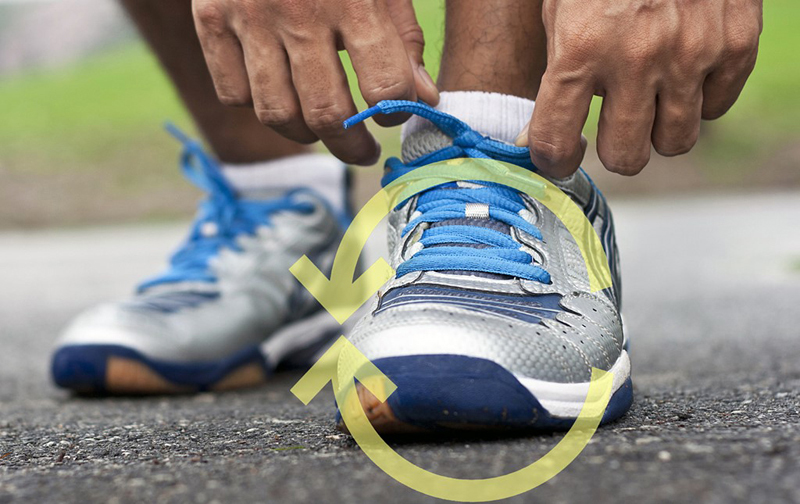
- Wearing shoes with moderate lateral torsional stiffness (how resistant the shoe is to torsional twisting around the toe-to-heel axis – see figure 1) makes it less likely to incur any type of lower extremity injury than wearing shoes with minimal or extreme lateral torsional stiffness, both of which make an injury more likely(7). This suggests that shoes need to have enough torsional stiffness to accommodate foot movement while preventing excessive movement (from too little stiffness).
- Runners with a history of metatarsophalangeal (MTP) joint or plantar injury should avoid shoes with high levels of midsole bending stiffness(8). This might include ‘energy return’ shoes, that often harness a stiffer, springy midsole structure to help return energy to the following stride after foot impact.
Figure 1: Depiction of lateral (torsional) stiffness in running shoes
Which shoes are best for ME?
The literature shows us that there are many, many ‘ifs, buts and maybes’ about which general shoe designs are most effective for reducing injury risk – and even then, the effectiveness of any recommendations is unknown(9). But even more difficult to answer is the question “Which shoe is best for me?” To try and answer this, the concept of trying to match matching a shoe’s features (eg, lateral stiffness, stability cushioning etc) to a runner’s foot type or gait pattern - movement patterns of the lower limbs - has become increasingly popular.
For most runners, the first port of call to get expert guidance on shoe choice is a dedicated running shoe retail outlet. Surveys of runners show that most consider running shoe salespeople as very knowledgeable, even if they are not experts(10). Runners purchasing shoes at these specialized stores often undergo a ‘gait analysis’ (see the video below), which often plays an important role in runners’ shoe selection(11). A gait analysis conducted in such running stores typically involves running in front of a salesperson who attempts to determine individual running biomechanics and prescribe the ‘perfect shoe’(12). In these analyses, the salesperson may also try to assess foot shape and prescribe a shoe on that basis.
The ‘comfort’ question
From the runner’s perspective, the assumption is that a correctly prescribed shoe that matches the demands of their particular running gait will result in a more natural and comfortable running motion; indeed, research shows that comfort is consistently prioritised by runners during running shoe selection(13). However, there is a problem here in that comfort is not only subjective but also appears to be a sensation that is manipulable. For example, studies show that runners may rate footwear comfort differently for identical shoes based on their product descriptions, recommendations by others and price(14)! That leaves open the possibility that a shoe prescribed following an ‘expert’ gait analysis may feel more comfortable and suited to a runner’s need than it really is because the runner believes it should be – a kind of placebo effect.
Incredibly, in spite of the widespread use of gait analysis in retail settings, little is known about how such personalised recommendations affect runners’ perceptions of comfort and subsequent shoe choice, irrespective of whether the shoe ‘matched’ an individual or not. In plain English, this could mean that runners are buying shoes that are not ideally suited to their needs all because a gait analysis ‘told’ them to. To date, no study has directly examined if the mere act of recommending a shoe based on gait analysis (even if that shoe is not suitable) alters a runner’s perceptions of that shoe. But now a fascinating new study by a team of Canadian and New Zealand scientists has provided us with definitive answers.
New research
Published in the journal ‘Translational Sports Medicine’, the goal of this study was to investigate how an ‘expert’ shoe recommendation resulting from a gait analysis affected runners’ perceptions of subjective comfort while running in those shoes, and also whether the runners might subtly change their running gait following a shoe recommendation compared with wearing a shoe that hadn’t been recommended(15). The researchers hypothesised that runners would score and rank so-called gait‐matched shoes more favourably than shoes that they believed weren’t gait matched, but were in fact identical to the so-called gait-matched shoes! In short, if you are told that a running shoe has been scientifically matched to your own gait, can that recommendation alone change how the shoe feels and your running movement patterns?
To carry out the study, 21 female recreational runners were recruited. All the women were aged 18 years, had been running a minimum of once per week for at least one month and completely injury-free for at least four weeks before the start of the study. The researchers specifically chose women for the study because most of the previous sports science research into running footwear has focussed almost exclusive on male runners.
Deceptive study
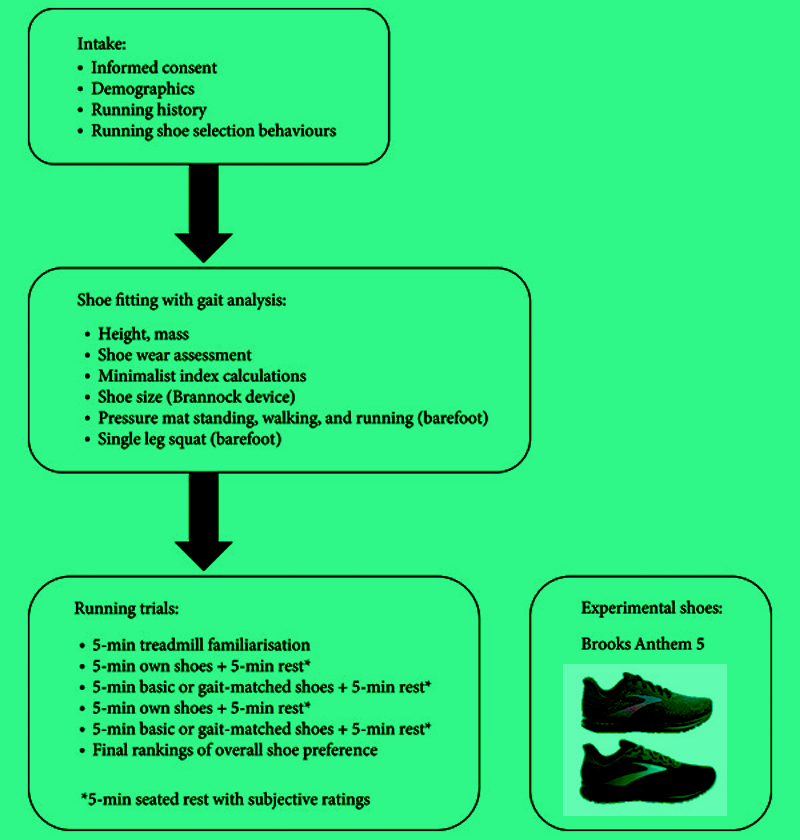
The design of the study itself was very crafty, and designed to deliberately deceive the runners in order to reveal the placebo effect of a particular ‘expert’ shoe recommendation (see figure 2):
- In stage 1 of the study, each runner underwent a bona fide clinical gait analysis. This included a physical assessment of their foot shape followed by a treadmill session filmed from multiple angles to capture a number of aspects of the runners’ gait characteristics.
- In stage 2, all the runners completed a treadmill familiarization trial for five minutes, followed by five minutes of running in their own personal running shoes, followed by a 5-minute rest.
- Stage 3 was where the deception began. Each runner was given a pair of Brooks ‘Anthem 5’ running shoes where they ran for five minutes followed by a 5-minute rest. However at this stage, they were told either that these shoes were perfectly gait matched to their specific needs, or that they were just basic running shoes that weren’t gait matched to their needs (see below).
- Stage 4 consisted of switching back to their personal running shoes again for five minutes followed by a 5-minute rest.
- Stage 5 was part two of the deception; the runners were given another pair of Brooks Anthem 5 shoes to wear, which had exactly the same construction and design as those in stage 3 but with a differing color scheme. In this stage, they were told the opposite of what they’d been told in stage 3 – ie those runners who’d been told these were perfectly gait matched shoes were now told they were just basic shoes and vice-versa. They ran for five minutes then rested for five minutes.
Figure 2: Schematic of the experimental protocol
By using identical shoes in stages 3 and 5, the researchers isolated the ‘expert recommendation’ as the only variable. The runners believed they were running in two differently constructed shoes types, when in reality, they were testing the same shoes with a different psychological mindset (ie ‘this shoe is for me’ or ‘this is just a basic shoe, not for me’)! As for exactly what they were told in stages 3 and 5, this was loaded with suggestion, and was as follows:
Basic: “This shoe model is quite basic. It is a generic shoe that doesn’t necessarily match your foot shape or running style. Basically, it can be used for distance running, but it is not specifically suited to you.”
Gait-matched: “Based on all the tests we did and the six pairs of shoes we have in the lab, this pair is the best option for you to maximize your comfort. Since this shoe matches your foot shape and running style, it will be extra comfortable when you run. We know from research that when a shoe is super comfortable and matches your body and running style, it usually leads to better performance and lower injury risk.”
What they measured
The researchers measured both subjective responses of the runners to each of the trial conditions and objective data in terms of the runners’ movement patterns while running. The subjective responses (ie how the shoe felt) were assessed using the ‘Running Shoe Comfort Assessment Tool’ (RUN-CAT – you can download the tool here) and visual analogue scales (VAS), where the runners were asked to comment on the comfort, perceived performance benefit, and perceived injury reduction of the shoes. The runners’ movement patterns were assessed by equipping the runners with wearable sensors, then performing video analysis, measuring biomechanical markers such as foot strike angle, cadence (strides per minute) and ‘tibial acceleration’, which refers to the impact forces travelling up the shin bone.
The findings
There were two main findings, which were very revealing. Firstly, when the runners wore the Brooks Anthem 5 shoes having been told they were extremely well gait matched, they reported significantly higher scores for comfort, performance, and hopes for injury reduction compared to when they wore the exact same shoe but were told it was just a ‘basic shoe’ and not gait matched (see figure 3). This demonstrates a clear and powerful ‘placebo effect’ when choosing running footwear; if you have been told by an ‘expert’ that a particular shoe is matched to your running gait or foot shape, your brain interprets the physical sensations when running in that shoe more positively.
Figure 3: Runners’ perceptions of their personal shoes vs. trial shoes
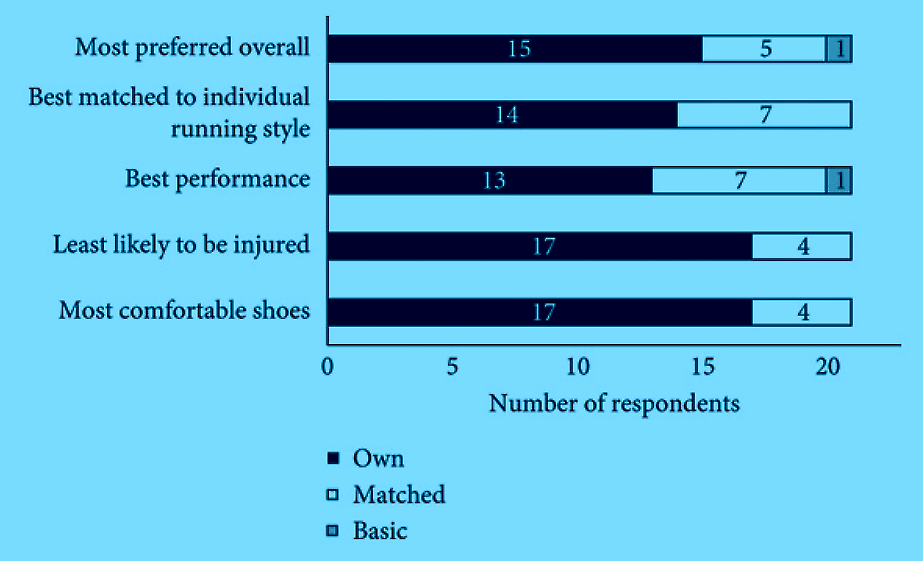
While the runners’ personal shoes (black) were perceived to be the most comfortable and best overall, the Brooks shoes described as ‘gait matched (clear) were perceived as preferable in a number of ways compared to when they were described as ‘basic unmatched shoes’ (gray) – even though they were the exact same shoes!
The second finding was that despite the significant change in perceptions of the same shoe used in stages 3 and 5 of the experiment, there was almost no change in the runners’ movement patterns. Key spatiotemporal parameters such as the foot-ground contact time or the stride cadence remained the same across both stages (actually not surprising as it was the same shoe being worn!). In short, while an expert’s recommendation of a particular shoe can alter your perception of how that shoe feels, it won’t alter your running biomechanics.
The third finding was that despite the positive effects of the gait-matched recommendation, over 70% of the runners still preferred their own shoes over the experimental ones. The implication here is that while an expert recommendation can trick you into perceiving that new shoe to be better, you are unlikely to perceive it as superior to your own familiar and habitual shoe
Using this information
The market for running shoe footwear runs into $billions and as such, there’s a strong incentive for manufacturers to sell runners their latest high-tech products, which purport to improve performance and reduce injury risk. What the study above suggests however is that a gait analysis can be used as a tool – either wittingly or wittingly – to convince runners that a particular pair of fancy shoes is definitely right for them, even if that’s not the case. This likely comes about because for many years, the perception of ‘comfort’ when trying out new shoes has been the gold standard for shoe selection. But it turns out that the perception of comfort is not an objective physical truth but can easily be manipulated – for example by information from a gait analysis.
In terms of buying practices, there are a number of take-home messages for runners. Firstly, while a gait analysis carried out in a lab and interpreted by an experienced physiotherapist can offer a valuable insight into your particular running gait, and the implications for injury prevention (including possible corrective exercises and shoe choice), in a retail environment carried out by a shoe salesman, it may amount to nothing more than a trust-building exercise. The reality is that there’s no such thing as a ‘perfectly matched’ shoe for your running gait – instead there will likely be a few different shoes that may suit your needs and that you can adapt to. That’s not to say that qualities such as lateral stiffness, heel-to-toe drop, medial support etc don’t matter. Just that you shouldn’t rely on a gait analysis in a shoe shop to be the sole arbiter of your shoe purchase!
The evidence from this study suggests instead that runners should adopt a more critical and self-reliant approach to buying shoes. When trying on shoes, try to block out the salesperson’s description of the shoe and zone in solely on what YOU are experiencing as you run in them. For example, if you’ve been told that a shoe suits you because it controls over-pronation, try to assess how it actually feels without that background story in your mind.
If a gait analysis suggests a certain shoe is ideal for you, be sceptical. This is particularly the case if your current shoes have proved comfortable over the longer term and have kept you injury free. If a ‘basic’ shoe of a similar design to your old shoes feels better to you than the expensive product recommended by a gait analysis, the chances are it is better. Your previous history with shoes that work for you will be a more reliable guide than a gait analysis and a five-minute treadmill test. Instead, use a gait analysis as a starting point, perhaps narrowing down an initial choice of 12 shoes to three that you can assess on the treadmill. Make the final decision based on your own perception of comfort without the influence of a sales pitch.
Finally, if you are happy with your current shoes, and they have kept you largely injury free, the best option by far is to stick with them; just replace them with a new pair of the same brand and model. If you do need to switch (for example if that model is no longer available) choose a shoe that is as similar in construction and design as your old shoes, and that which feels comfortable. Allow your body time to adapt to the slight changes in running gait that will inevitably occur when changing to a different shoe.
References
1. Br J Sports Med. 2007;41(8):469–480
2. Mil Med. 2015 Mar; 180(3):321-8
3. Clin J Sport Med. 2001 Jan;11(1):2-9
4. Sci Rep. 2018 Nov 30;8(1):17496

Andrew Hamilton
Latest Issue
Subscribe Today
Newsletter Sign Up
Testimonials
Dr. Alexandra Fandetti-Robin, Back & Body Chiropractic
Elspeth Cowell MSCh DpodM SRCh HCPC reg
William Hunter, Nuffield Health
Subscribe Today

Newsletter Sign Up

Coaches Testimonials
Dr. Alexandra Fandetti-Robin, Back & Body Chiropractic
Elspeth Cowell MSCh DpodM SRCh HCPC reg
William Hunter, Nuffield Health
Subscribe Today
Latest Issue
Keep up with latest sports science research and apply it to maximize performance
Today you have the chance to join a group of athletes, and sports coaches/trainers who all have something special in common...
They use the latest research to improve performance for themselves and their clients - both athletes and sports teams - with help from global specialists in the fields of sports science, sports medicine and sports psychology.
They do this by reading Sports Performance Bulletin, an easy-to-digest but serious-minded journal dedicated to high performance sports. SPB offers a wealth of information and insight into the latest research, in an easily-accessible and understood format, along with a wealth of practical recommendations.
*includes 3 coaching manuals
Get Inspired
All the latest techniques and approaches


Sports Performance Bulletin helps dedicated endurance athletes improve their performance. Sense-checking the latest sports science research, and sourcing evidence and case studies to support findings, Sports Performance Bulletin turns proven insights into easily digestible practical advice. Supporting athletes, coaches and professionals who wish to ensure their guidance and programmes are kept right up to date and based on credible science.
