
 close


 LOGIN
Running performance: HIIT vs. plyometrics – the choice is yours

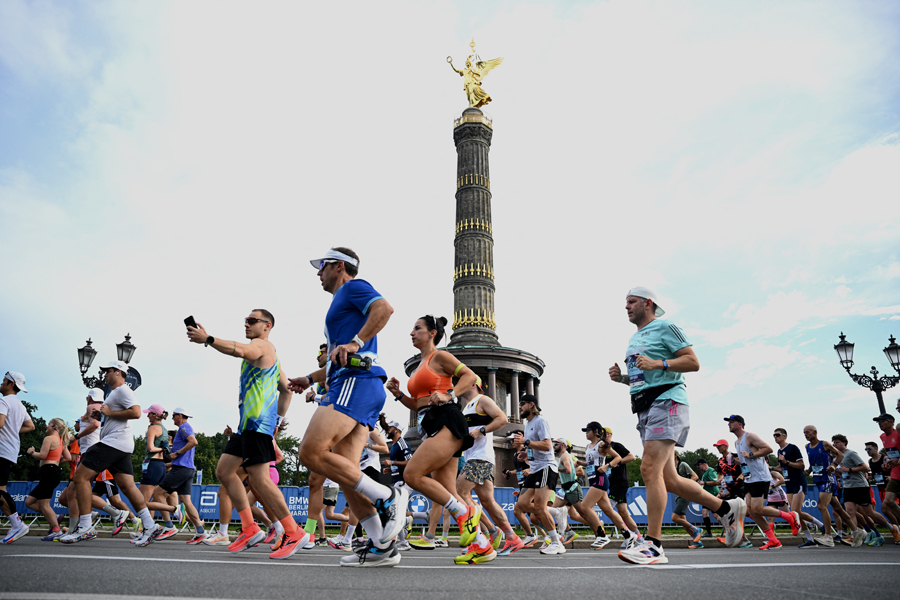
Running is one of the most popular forms of recreational sport and fitness training, and for good reason: it’s time efficient, can be done anywhere at any time and needs a minimum of equipment (just a good pair of running shoes will suffice!). While elite and professional runners train and compete to win, research shows that amateur and recreational runners typically participate for improvements in health, fitness and personal enjoyment(1). However, that doesn’t mean performance doesn’t matter to these non-elites; most runners still want to improve their endurance performance, as well as other areas such as speed, agility, and overall functional capacity. That’s why runners often look for supplementary training methods that are both effective and time-efficient, including interval sessions, resistance training, and plyometrics training.
Going beyond basic running
For novices, simply building up a base level of running fitness by running a bit further and faster each week is often quite sufficient training in itself. But over time, and as these initial fitness gains level off, a performance plateau is reached at which point many runners will look for other training methods from the toolbox. These might include the use of high-intensity interval training (HIIT - bursts of high-intensity exercise separated by recovery periods) to boost maximum oxygen uptake and raise lactate threshold levels, and resistance training or plyometrics to improve running ‘economy’ (a measure of how efficiently your muscles use oxygen to maintain a sub-maximal pace – improved economy is strongly linked to superior endurance performance).
Plyometrics uses quick eccentric–concentric muscle movements, also known as the stretch–shortening cycle. This system of training is particularly effective for maximizing neuromuscular responses and developing speed and explosive power(2,3). Meanwhile recent research on runners has found that adding plyometrics to a conventional resistance program results in additional improvements in running economy(4).
Plyometrics vs. resistance training
Trying to get the best bang for buck is important when adding an additional training mode to a program so it’s not surprising that some researchers have compared plyometrics training to resistance training in athletes. In a previous SPB article, we looked at recent research comparing the benefits of plyometrics vs. strength training in soccer players(5). In it, we cited evidence that plyometrics training is able to deliver many potential benefits for team sport athletes, including improved sprinting ability, agility and change of direction capacity and overall leg strength. However, for players who are unaccustomed to plyometrics training, there are also some disadvantages, the most important being the repeated eccentric contractions, which can lead to high levels of delayed onset muscle soreness (DOMS), and which may also (due to the more explosive nature of the exercises) aggravate niggling injuries.
However, what the research on soccer players showed was that strength training, especially when focussing on thigh strength, was a viable alternative to plyometrics. Not only did quadriceps strength training (using exercises such as squats, lunges, leg extensions, leg presses etc) appear to produce comparable or even superior strength, sprint and jumping (hopping) results to plyometrics training, it was less likely to lead to muscle soreness post exercise in players unaccustomed to plyometrics, and therefore likely to be better tolerated by those who are new to conditioning programs.
HIIT vs. plyometrics
While there’s been much discussion about whether or how to use either strength or plyometrics or HIIT to supplement an endurance program for enhanced performance, there’s been very little research comparing the benefits of plyometrics to HIIT, and certainly none in recreational runners. This is an interesting area for research; because the work intervals in HIIT are intense, the muscular loading is much higher than during steady-state running. This more intense loading repeated over several bursts shares a similar loading pattern seen in plyometrics training, which theoretically means that non strength-trained recreational runners who perform HIIT may be able to obtain some of the benefits that plyometrics delivers. But does this theory work in practice? How does adding HIIT compare with adding plyometrics when used by recreational runners? The good news is that brand new research has answered this question.
New research
Published at the beginning of this month in the journal ‘BMC Sports Science, Medicine and Rehabilitation’, this study investigated how HIIT and plyometric training affected agility, lower limb power, sprint speed, and functional performance in recreational runners(6). The 6-week study took the form of a randomized controlled trial involving 60 recreational runners. Male and female runners were recruited, all of whom were aged 18 to 30 years and free of any injuries, fractures, or underlying medical conditions such as heart disease. The 60 participants were randomly divided into one of three equal groups:
· HIIT group - 20 participants who performed high-intensity intervals using a circuit training type structure, three times per week for six weeks.
· Plyometrics training group - 20 participants who focused on explosive jumping drills, three times per week for six weeks.
· Control group - 20 participants who were not given any high-intensity exercise intervention but instead performed a generic exercise program of low-intensity exercises for 30 minutes with the same warm up and cool down as above.
Although the length of the sessions varied between the groups (HIIT: 30 minutes; plyometrics: 45 minutes), the modified Borg RPE (perceived exertion) scale was used to track exercise intensity to ensure the participants were exerting similar amounts of perceived effort.
How they trained
HIIT group: each session lasted 30 minutes, consisting of a 10-minute warm-up, 15 minutes of HIIT exercises, followed by a 5-minute cool-down. Exercises included explosive push-ups, various jumping and kicking exercises, and punching techniques, sit ups and crunches and medicine ball exercises. Work intervals began with 10-15 seconds duration with the same length rest intervals, gradually increasing up to 25-second work intervals with 25-second rests. During all the exercises, the participants were instructed to aim for a ‘high’ level of effort (between 7 and 9 on the Borg 0–10 scale – see figure 1).
Figure 1: The Borg (modified) 1-10 scale of exertion
You need to be logged in to continue reading.
Please register for limited access or take a 30-day risk-free trial of Sports Performance Bulletin to experience the full benefits of a subscription. TAKE A RISK-FREE TRIAL

Andrew Hamilton
Latest Issue
Subscribe Today
Newsletter Sign Up
Testimonials
Dr. Alexandra Fandetti-Robin, Back & Body Chiropractic
Elspeth Cowell MSCh DpodM SRCh HCPC reg
William Hunter, Nuffield Health
Subscribe Today
Newsletter Sign Up

Coaches Testimonials
Dr. Alexandra Fandetti-Robin, Back & Body Chiropractic
Elspeth Cowell MSCh DpodM SRCh HCPC reg
William Hunter, Nuffield Health
Subscribe Today
Latest Issue
Keep up with latest sports science research and apply it to maximize performance
Today you have the chance to join a group of athletes, and sports coaches/trainers who all have something special in common...
They use the latest research to improve performance for themselves and their clients - both athletes and sports teams - with help from global specialists in the fields of sports science, sports medicine and sports psychology.
They do this by reading Sports Performance Bulletin, an easy-to-digest but serious-minded journal dedicated to high performance sports. SPB offers a wealth of information and insight into the latest research, in an easily-accessible and understood format, along with a wealth of practical recommendations.
*includes 3 coaching manuals
Get Inspired
All the latest techniques and approaches


Sports Performance Bulletin helps dedicated endurance athletes improve their performance. Sense-checking the latest sports science research, and sourcing evidence and case studies to support findings, Sports Performance Bulletin turns proven insights into easily digestible practical advice. Supporting athletes, coaches and professionals who wish to ensure their guidance and programmes are kept right up to date and based on credible science.
