
 close
close


 LOGIN
LOGINNovice vs. experienced runners: all moves are not equal
Why exactly are novice runners so much more injury prone than experienced runners, and how can novices reduce their injury risk? SPB reports on new research


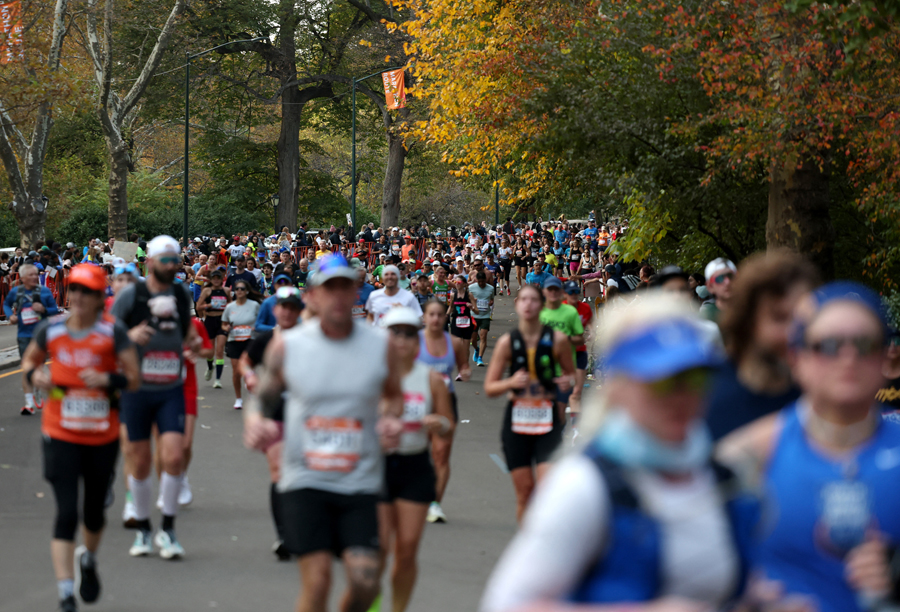
Running is one of the most popular forms of physical exercise globally and with good reason; running is effective and efficient for developing aerobic and cardiovascular fitness, can be done anytime, anywhere, and it only requires a minimal outlay for equipment – ie decent running shoes. However, there is a downside for runners, especially who are new to the sport, and that is the risk of picking up a running-related injury (RRI).
Injury risks for runners
Despite running’s benefits, there’s a definite downside for those who run as their main sport, and that is injury. Numerous studies show that regular running is associated with a notable incidence of running-related injuries (RRIs). For example, in any 12-month period, previous research has shown that lower extremity RRIs occur in an estimated 50% or so of recreational runners, with some studies suggesting this to be even higher(1-3). And in a study published in 2024, data showed that RRIs will affect up to 69.8% of runners at some point(4).
The increased risk of RRIs in any one runner is complex and multi-factorial. A common theme however is repeated and accumulated musculoskeletal trauma. The degree to which a runner is at risk of this trauma depends on various factors including:
· The runner’s personal anthropomorphic characteristics (eg weight, build, limb lengths etc) and biomechanical factors (eg muscle weaknesses and imbalances, excessive or insufficient flexibility in joints and muscles etc).
· Errors in training approach (eg an excessive training volume and/or load, insufficient recovery, a training load that increases too rapidly etc).
· A history of previous running-related injuries(5,6).
· The prior training experience of the runner; novices are at much greater risk than experienced runners(7,8).
The novice factor
Of the all the above factors, being a novice runner appears to be one of the biggest risk factors for sustaining an injury, but why is this? There are a number of theories to explain this phenomenon, many of which are very plausible and fit with our current understanding of human physiology. For example, one likely reason is that the body’s structural elements, like bone and tendon, are MUCH slower to adapt to training loading than the body’s cardiovascular and circulatory system. Human tendons and connective tissues require many weeks to adapt to increased training loads while bone requires months to adapt (by becoming stronger and denser)(9). In other words while the aerobic fitness and long-distance endurance capacity of a novice runner improves fairly rapidly in response to training, his or her structural integrity lags well behind when it comes to adaptation.
Over the last decade or so, a number of studies have also suggested that biomechanical parameters such as stride frequency (cadence) and length, joint angles, joint moments, and ground reaction forces show major differences in novice runners compared to experienced runners, which dramatically increases injury risk(10-12). In short, ‘novice runners don’t run like experienced runners’. For example, compared to novice runners, experienced runners (with years of running experience) generally demonstrate higher stride cadence and shorter stride length(13,14).
The problem is that while different studies have identified certain differences in running movement patterns (gait) between novice and experienced runners, to date there’s been no comprehensive study properly describing and summarizing all of these differences. That’s far from ideal because without a proper understanding of how the running gaits of novice and experienced runners differ, it’s not possible to prescribe conditioning and corrective exercises to novices, which might help them to optimize their running gait and run more like experienced runners!
New research
The good news is that new research by a team of Chinese scientists from the University of Shanghai has attempted to gather together all the evidence on biomechanical differences between novice and experienced runners and synthesize them into general findings, which can be used by runners and their coaches(15).
Published in the journal ‘Frontiers in Sports and Active Living’, this study took the form of a systematic review that synthesized that methodically collated and reviewed all the available evidence from previous studies related to this topic.
To do this, a systematic search was conducted to identify all relevant studies published between 2004 and December 2025. To be included in the analysis all the relevant studies had to meet strict criteria:
· A comparison of novice runners to experienced runners.
· Both categories clearly defined (eg novice less than one year’s training history, experienced more than one year).
· Had to investigate at least one or more biomechanical outcomes in the novice vs. experienced runners.
· Only studies that looked at running outcomes in runners (other sports were excluded).
In total, 14 studies containing a total of 457 runners were identified for the analysis and used to draw conclusions.
What they found
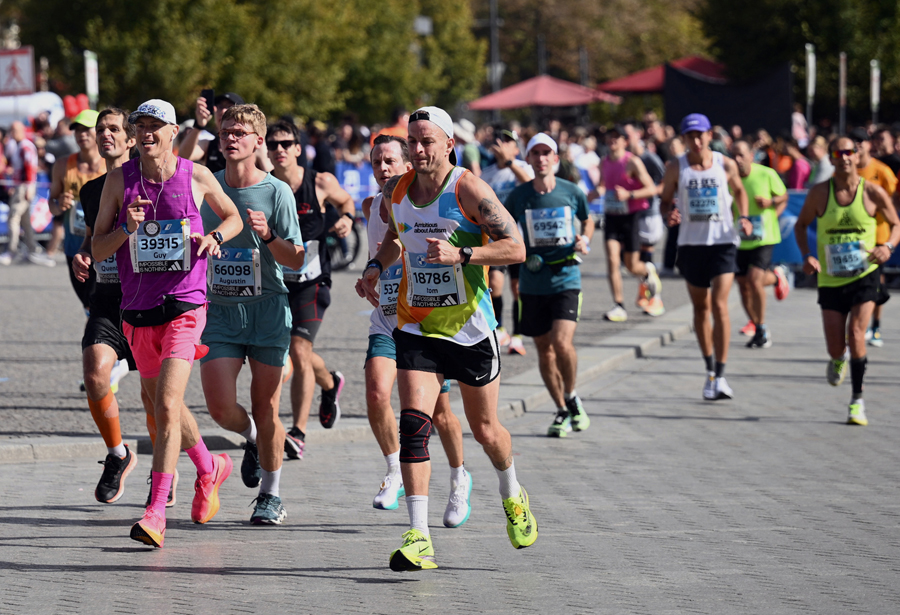
When the data from the 14 studies was analyzed so that more general conclusions could be drawn, a number of findings emerged. In particular, the researchers identified several key differences in how these two groups move:
· Consistency of running gait – the first and most important finding was that novice runners tended to be much less consistent in their running gait – more technically known as displaying ‘spatiotemporal variability’. In plain English, while experienced runners tended to land their feet very predictably with the same stride length and same timing with every single foot strike, the novices’ strides varied much more from one stride to the next. This is relevant because a lack of spatiotemporal consistency means that the body is less stable and has to constantly activate muscles to try and correct the balance/restore the rhythm, which over thousands of strides, can lead to increased fatigue and risk of injury.
· Muscle control/coordination – Novice runners tended to have weaker ‘proximal muscle control’. Put simply, the data showed that in novices, the core and hip muscles were not as effective at stabilizing their pelvis and hips during a run. This has a knock on effect; because the pelvis/hips are constantly moving out of ideal alignment, the joints below - knees and ankles – have to move through a larger range of motion than necessary to compensate. This larger range of movement creates extra loading, and an increased risk of injury. By contrast, the experienced runners displayed more economical running gaits, with less pelvis/hip ‘wobble’ and therefore less excursion in lower joint movements.
· Cadence and stride length – in line with previous research, the experienced runners tended to take shorter and quicker steps for a given pace (higher cadence). Novices however tended to take longer strides, which can lead to ‘overstriding’, where the foot lands too far in front of the body, sending a harsher shock wave up the leg and increasing muscle and tissue trauma.
In their summing up, the researchers concluded that ‘novice runners exhibit less stable and less coordinated gait patterns, reflecting reduced neuromuscular control and higher injury susceptibility’.
Practical implications
This research tells us that novice runners aren’t just ‘less experienced’ and less resilient than experienced runners, they actually run differently (and less efficiently), which increases the risk of sustaining an injury. The clear implication therefore is that while it’s really important for novices to build up running mileages very slowly so that connective tissue and bone development can ‘keep up’ with muscular and cardiovascular development, they can also benefit from working on a more efficient running technique. In short, while it seems simple and natural, to be able to run efficiently is a skill that the nervous system must learn. Experienced runners have learnt this skill over a period of time and subconsciously ‘tuned’ their running gait to be as efficient as possible. However, novices start their running journey without this skill, resulting in a less coordinated gait that makes them more susceptible to common issues like runner’s knee or shin splints.
Beyond the normal recommendations for all novice runners (build up slowly, ensure adequate recovery), what additional steps can novices take to help minimize injury risk while they develop a more efficient running gait? Although the study above didn’t specifically test this, the implication is that a conditioning program or appropriate steps that target the weaknesses outlined above could be of real benefit for novices. A conditioning program could include:
· Core stability exercises performed 2-3 times per week.
· Balance drills on unstable surfaces.
· Exercise to develop better leg strength and knee stability (eg single-leg squats)
· Performing running drills such as ‘high knees’, ‘butt kicks’, and A-skips, B-skips and C-skips (see below) to refine coordination and reduce unnecessary motion.
· Combing running with some other activities such as cycling or yoga – a kind of ‘cross-training’ approach.
· Taking advice on optimizing running gait from an experienced physio or running coach.
The key point for novices to always remember is that improving running performance isn’t about just running more, it’s about running better. This article by ex-international coach John Shepherd also contains some great early conditioning advice for novice runners seeking to avoid injury!
References
1. Sports Health. 2020;12(3):296-303
2. Br J Sports Med. 2007;41(8):469-480
3. J Sport Health Sci. 2021;10(5):513-522
4. J Orthop Sports Phys Ther. 2024;54(2):133–41
5. Med. Žurnal. 2013;19:345–353
6. J Sport Health Sci. 2021 Jan; 10(1):14-28
7. Phys Med Rehabil Clin N Am. 2005 Aug; 16(3):651-67, vi
8. Sports Med. 2014 Aug; 44(8):1153-63
9. J Appl Phys 1992; 73(3):1165-1170
10. J Sport Health Sci. (2024) 13:793–804
11. Eur J Appl Physiol. (2000) 82:297–304
12. Eur J Sport Sci. (2014) 14:130–6
13. Gait Posture. (2019) 70:376–82
14. J Sports Sci. (2018) 36:272–8
15. Front Sports Act Living. 2026 Feb 23:8:1733815. doi: 10.3389/fspor.2026.1733815. eCollection 2026


Latest Issue
Subscribe Today

Newsletter Sign Up
Testimonials
Dr. Alexandra Fandetti-Robin, Back & Body Chiropractic
Elspeth Cowell MSCh DpodM SRCh HCPC reg
William Hunter, Nuffield Health
Subscribe Today

Newsletter Sign Up

Coaches Testimonials
Dr. Alexandra Fandetti-Robin, Back & Body Chiropractic
Elspeth Cowell MSCh DpodM SRCh HCPC reg
William Hunter, Nuffield Health
Subscribe Today
Latest Issue

Keep up with latest sports science research and apply it to maximize performance
Today you have the chance to join a group of athletes, and sports coaches/trainers who all have something special in common...
They use the latest research to improve performance for themselves and their clients - both athletes and sports teams - with help from global specialists in the fields of sports science, sports medicine and sports psychology.
They do this by reading Sports Performance Bulletin, an easy-to-digest but serious-minded journal dedicated to high performance sports. SPB offers a wealth of information and insight into the latest research, in an easily-accessible and understood format, along with a wealth of practical recommendations.
*includes 3 coaching manuals
Get Inspired
All the latest techniques and approaches


Sports Performance Bulletin helps dedicated endurance athletes improve their performance. Sense-checking the latest sports science research, and sourcing evidence and case studies to support findings, Sports Performance Bulletin turns proven insights into easily digestible practical advice. Supporting athletes, coaches and professionals who wish to ensure their guidance and programmes are kept right up to date and based on credible science.
